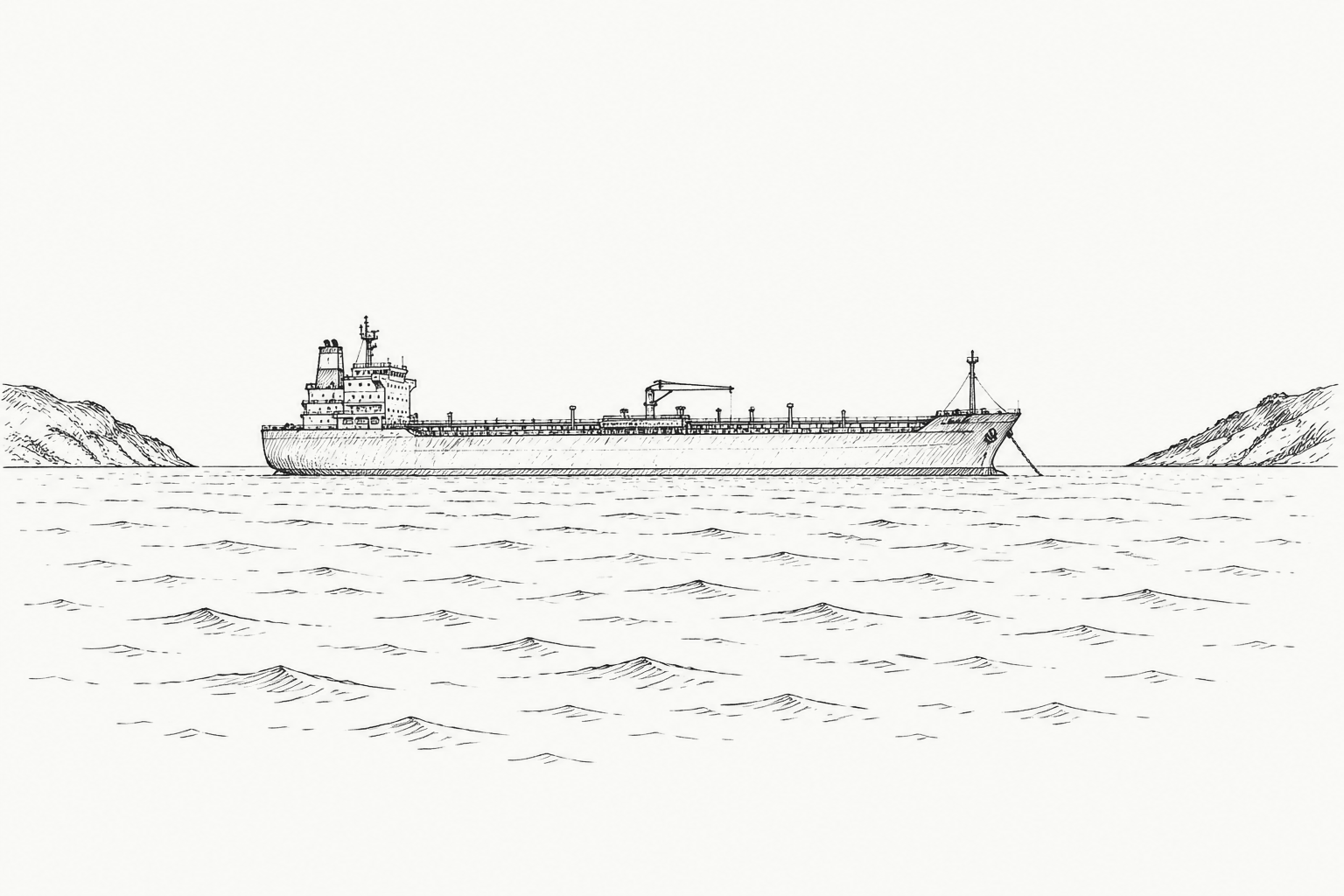
President Trump on Saturday ordered envoys Steve Witkoff and Jared Kushner to scrap a planned trip to Islamabad, hours after Iranian Foreign Minister Abbas Araghchi flew out of Pakistan without a deal, collapsing the diplomatic track markets had counted on to reopen the Strait of Hormuz. The same day, S&P Global Vice Chairman Daniel Yergin called the strait's near-closure "the biggest energy disruption we've ever seen," the Qatar Tribune reported.
The combination turns a historic disruption into an open-ended one. Brent crude is nearly 50 percent above its pre-war level, the Associated Press reported, and the International Energy Agency has called the 2026 Hormuz crisis the largest supply disruption in the history of the global oil market. With talks suspended and Iran's military threatening retaliation against the U.S. naval blockade, the inventory clock Yergin flagged keeps running.
What broke Saturday
The White House said Friday that Witkoff and Kushner would travel to Islamabad for a second round following this month's face-to-face meeting between Vice President JD Vance and Iranian parliament speaker Mohammad Bagher Qalibaf. By Saturday evening, two Pakistani officials told the Associated Press that Araghchi had left the capital. Trump posted: "If they want to talk, all they have to do is call!!!" He told Fox News, "I said, 'Nope, you're not making an 18-hour flight to go there. We have all the cards.'"
Araghchi, who met Pakistani Prime Minister Shehbaz Sharif and Army Chief Field Marshal Asim Munir, posted on social media: "Have yet to see if the U.S. is truly serious about diplomacy," before flying to Oman. Iran's state news agency IRNA said he would visit Russia before returning Sunday.
The Yergin frame
Yergin's warning, delivered as the talks were unraveling, recasts the crisis from oil story to broad commodity story. The S&P Global vice chairman said the disruption hits natural gas, fertilizer, helium, aluminum and petrochemicals, with Asia bearing most of it because "80 percent of the oil, 90 percent of the LNG went to Asia."
Brent surpassed $100 a barrel on March 8 for the first time in four years and peaked at $126, the Qatar Tribune reported. Yergin flagged a disconnect between resilient financial markets and conditions on the ground, citing "people in Asia actually not having enough oil, shortages, rationing, businesses closing down, restaurants not operating because they don't have energy." He also said 20 percent of cars built worldwide this year will be electric vehicles, an adoption curve he expects the crisis to steepen.
On the blockade
U.S. forces have blockaded Iranian ports in response to Tehran's grip on the strait, through which a fifth of the world's oil moves in peacetime. Iran attacked three ships this week, the AP reported, and Trump has ordered the military to "shoot and kill" small boats that could be placing mines. Germany's Defense Minister Boris Pistorius said Saturday his country was sending minesweeper ships to the Mediterranean to help clear Iranian mines from the strait once hostilities end.
Iran's joint military command warned Saturday that "if the U.S. continues its aggressive military actions, including naval blockades, banditry, and piracy" it will face a "strong response." Trump told reporters that within 10 minutes of canceling the envoys' trip, Iran sent a "much better" proposal, without offering details, and reiterated that Iran "will not have a nuclear weapon."
Counterpoint
Today's sources skew center and lean-left; no lean-right outlet appears, and the case that the cancellation is a negotiating tactic strengthening Washington's hand goes largely unmade beyond the president's own remarks. Trump's claim that a tougher Iranian paper landed within 10 minutes of his order is uncorroborated by Tehran, which framed Araghchi's departure as a setback. Whether Yergin's inventory warning translates into rationing in U.S. and European markets, rather than only Asian ones, will hinge on how long the strait stays shut.
What's next
Araghchi returns to Islamabad on Sunday after stops in Oman and Russia, IRNA reported, leaving Pakistan as the lone live channel between Washington and Tehran. The indefinitely extended ceasefire Trump announced this week remains in force on paper. The oil market reopens Monday with the diplomatic track in pieces and the strait still closed.