President Trump told his national security team he is dissatisfied with Iran's proposal to reopen the Strait of Hormuz without first resolving the dispute over Tehran's nuclear program, people briefed on the matter told The New York Times, sending U.S. crude above $100 a barrel Tuesday and pushing Brent past $111 as a Japanese supertanker became the first to test the strait since Iran reimposed a full blockade last week.
The White House signals harden a stalemate that has held the Strait of Hormuz, the conduit for about a fifth of the world's oil and liquefied natural gas, in suspension for two months. With Trump unwilling to lift his naval blockade of Iranian ports without a nuclear concession and Tehran unwilling to give one, the diplomatic track markets counted on after Saturday's collapsed Islamabad trip is narrowing, even as Gulf allies, European capitals and shipowners act on the assumption that the chokehold will not lift soon.
What's new
West Texas Intermediate futures rose more than 4 percent to $100.62 a barrel by 7:46 a.m. Eastern on Tuesday, CNBC reported, while Brent advanced about 3 percent to $111.68. NBC News said the U.S. national gasoline price average hit a wartime high of $4.18 early Tuesday, up from $4.11 a day earlier. Andy Lipow of Lipow Oil Associates told CNBC that absent new negotiations WTI would drift to $100 and Brent above $110, and that an immediate ceasefire would still take four to six months to clear mines and restart refining.
White House press secretary Karoline Leavitt said Trump met his national security team Monday morning to discuss the offer but kept the administration's posture narrow. "The proposal was being discussed," Leavitt said, according to CBS News, adding that "the president's red lines with respect to Iran have been made very, very clear." She declined to say the administration was considering the plan.
The tanker
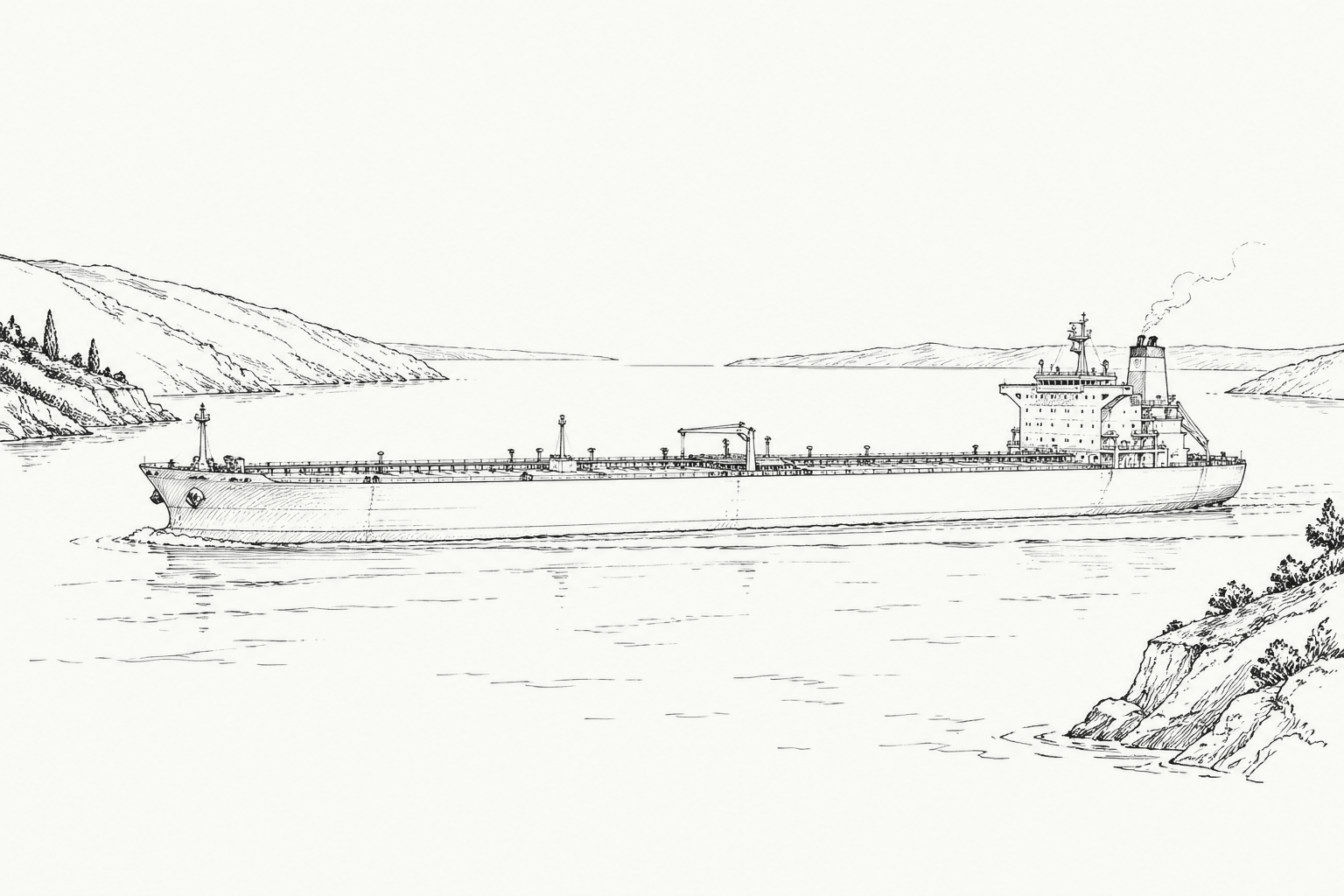
The Japanese-owned crude carrier Idemitsu Maru cleared the Strait of Hormuz on Tuesday morning carrying 2 million barrels loaded at Saudi Arabia's Ras Tanura on April 17, Iran's semi-official Tasnim news agency said, confirming MarineTraffic data reported by CBS News. Tasnim, linked to Iran's Islamic Revolutionary Guard Corps, said the tanker "passed through the Strait of Hormuz with coordination from Iran." It was unclear whether the ship's owner, Idemitsu Kosan Co., paid Tehran for safe passage.
Three other vessels left the Persian Gulf without Iranian interference Tuesday, including a Chinese-owned tanker that switched off its transponder before exiting and a Turkish cargo ship stuck in Iraqi ports since the war began Feb. 28, CBS reported. Tasnim announced April 21 that the IRGC was reimposing a complete blockade on shipping through the strait, and last week Iranian forces seized at least two commercial ships in the same waterway. The Idemitsu Maru is the first Japanese supertanker to transit since that order.
Rubio's line
Secretary of State Marco Rubio called the latest Iranian offer "better than what we thought they were going to submit" in a Fox News interview Monday but said any final deal would have to be one that "definitively prevents them from sprinting toward a nuclear weapon at any point." Rubio rejected the idea that Tehran's terms amounted to opening the waterway. "That's not opening the straits. Those are international waterways," he told Fox. "They cannot normalize, nor can we tolerate them trying to normalize, a system in which the Iranians decide who gets to use an international waterway and how much you have to pay them to use it."
An Iranian official told PBS NewsHour the U.S. has already described the offer as not good enough and that Tehran is unlikely to adjust its demands, calling the moment "totally an impasse." The same official said Iran has been willing to consider a freeze of less than 10 years on domestic nuclear enrichment, a concession Washington has not accepted.
Allies fray
German Chancellor Friedrich Merz delivered the sharpest public rebuke yet from a U.S. ally. "An entire nation is being humiliated by the Iranian leadership, especially by these so-called Revolutionary Guards," Merz told students in Marsberg on Monday, according to CNBC, adding that "The Americans clearly have no strategy" and warning of an Afghanistan-style entanglement. European Commission chief Ursula von der Leyen said last week the European Union has paid 25 billion euros, or about $29.2 billion, more for oil and gas imports since the war began. Sweden's energy minister, Ebba Busch, warned Tuesday of a possible jet-fuel shortage tied to the closure.
Counterpoint
Iran's foreign minister, Abbas Araghchi, met Russian President Vladimir Putin in Moscow on Monday after refusing to meet U.S. officials in Islamabad; PBS reported Putin called Iran's struggle heroic. Iran's deputy defense minister, Gen. Reza Talaei-Nik, told the ANA news agency from Kyrgyzstan that the war reflects "a broader global shift away from a 'unipolar unjust order' toward a multipolar world," CBS News reported. NPR cast the U.S. position as one of growing international backlash, with the blockade interrupting global fuel supply and lifting living costs worldwide. Today's dossier contained no right-leaning U.S. coverage; the administration's on-record response is limited to Leavitt's brief remarks and Rubio's Fox News interview.
The Gulf Cooperation Council was set to convene an exceptional summit Tuesday in Jeddah to take up the Iranian proposal, two Gulf officials told NBC News, and the White House is expected to return with a counter-offer in coming days.