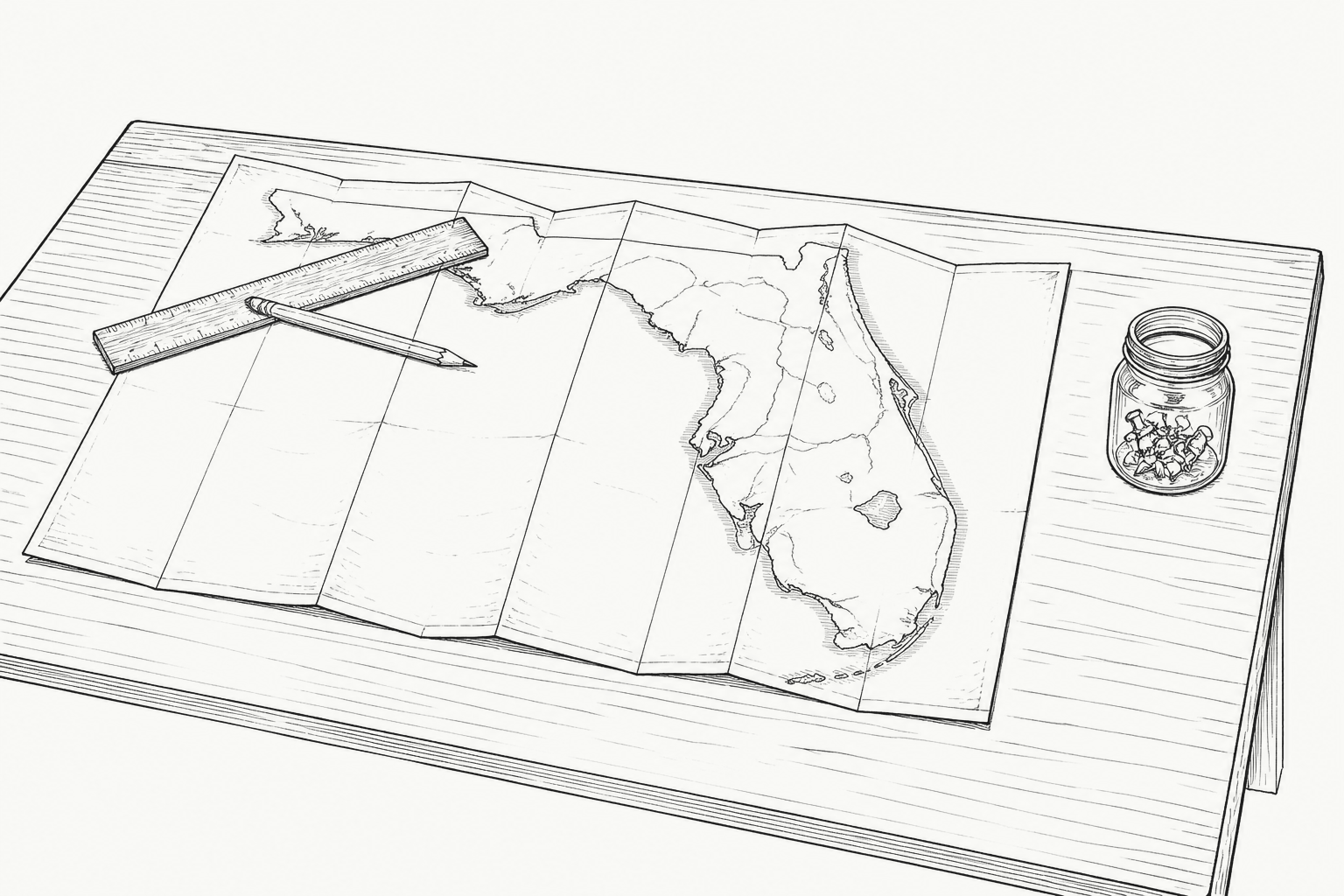
The Florida Legislature on Thursday sent Gov. Ron DeSantis a new congressional map that could lift Republicans' share of the state's U.S. House delegation to 24 of 28 seats, the first state to redraw its lines since the Supreme Court narrowed the Voting Rights Act a day earlier. The Florida House passed the plan 83-28 and the Senate followed, 21-17, after a two-day special session.
The vote turns Wednesday's ruling in the Louisiana case, which struck down a majority-Black district drawn under Section 2 of the 1965 Voting Rights Act, into immediate redistricting math. DeSantis aides argue the new lines, which they describe as race-neutral, will survive a state constitution that bars partisan map-drawing because the federal decision and prior Florida Supreme Court rulings have weakened those guardrails. The map is certain to be sued.
What changes
The new districts redraw Democratic-leaning territory around Orlando, Tampa-St. Petersburg and the south Florida arc from Palm Beach through Fort Lauderdale to Miami. Reps. Jared Moskowitz and Debbie Wasserman Schultz are among the incumbents who could lose their seats. The plan also effectively eliminates a nearly majority-Black south Florida district most recently held by Rep. Sheila Cherfilus-McCormick, a Black Democrat who resigned earlier this month. The current Florida delegation splits 20-8 in favor of Republicans; the four-seat potential swing matches what Virginia Democrats expect from their own recent referendum, now in state court.
Louisiana resets
Louisiana, the state at the center of Wednesday's Supreme Court decision, may have to change its redistricting plan to comply with the ruling, PBS NewsHour reported. Chief Justice John Roberts had described the voided 6th Congressional District, represented by Democratic Rep. Cleo Fields, as a "snake" stretching more than 200 miles to link parts of Shreveport, Alexandria, Lafayette and Baton Rouge. Justice Samuel Alito, writing for the 6-3 majority, called it "an unconstitutional gerrymander." The broader effect of the decision, PBS reported, may be felt more strongly in 2028 because most filing deadlines for this year's congressional races have passed.
On the floor
Florida Republicans said little during the session. The bill's sponsor, Rep. Jenna Persons-Mulicka of Fort Myers, told colleagues she believes "there is a likelihood that that map will be upheld against legal challenge," and declined to discuss the intent of the unnamed map drafters beyond DeSantis aide Jason Poreda, who took sole credit. Rep. Michele Rayner, a St. Petersburg Democrat, accused Republicans of acting at the White House's direction. House Minority Leader Fentrice Driskell of Tampa told her colleagues, "On destroying our democracy, they've been aligned," she said, "and that's what we did here today." Senate Rules Chair Kathleen Passidomo limited public testimony to 30 seconds a speaker.
Counterpoint
Today's reporting comes entirely from center wire desks — PBS NewsHour and CNBC. Conservative-press framing of the Florida vote, which has generally cast the redraw as a corrective to court-imposed racial gerrymanders, is not represented in this account. DeSantis and Florida Republican leaders did not respond to follow-up questions about the map's authorship by press time, and no statement from the National Republican Congressional Committee specific to the Florida bill had been issued when this edition closed.
DeSantis is expected to sign the map within days. Litigation over the Florida lines and any redrawing forced on Louisiana will define the next stage of the national redistricting fight the Supreme Court reopened on Wednesday.