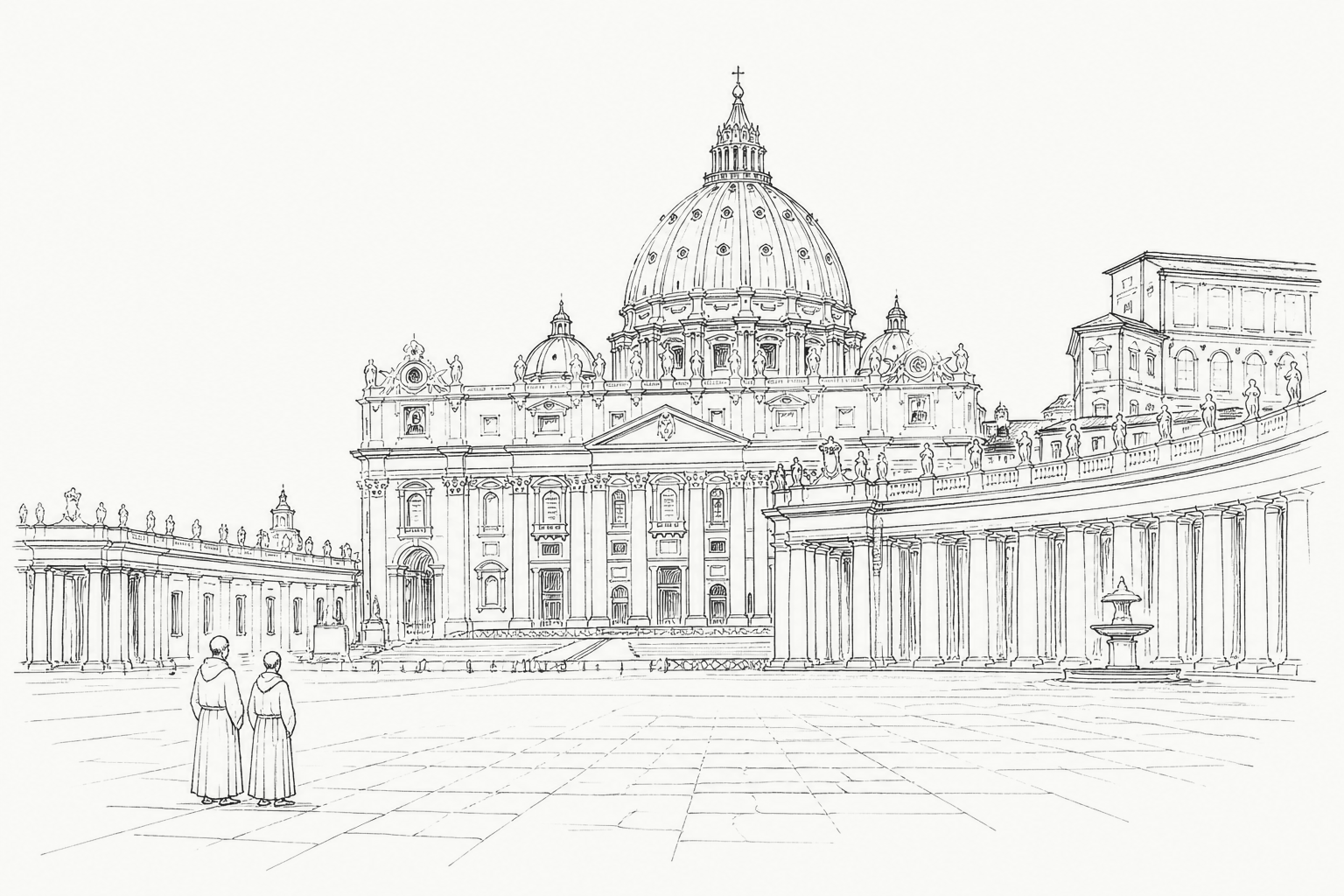
Secretary of State Marco Rubio spent two and a half hours at the Vatican on Thursday meeting Pope Leo XIV and Cardinal Pietro Parolin, the Holy See's top diplomat, in a fence-mending visit aimed at steadying U.S.-Vatican relations after weeks of public sparring between President Trump and the Chicago-born pope over the Iran war.
The encounter is the Trump administration's first direct engagement with Leo in nearly a year, and it lands while Trump and the pontiff remain at odds over the morality of the U.S. campaign against Tehran. Rubio, a practicing Catholic and the son of Cuban immigrants, was sent to Rome carrying what Trump described as a single message on Iran, even as the State Department framed the trip as an affirmation of an enduring partnership.
What was said
The State Department said Rubio and Leo discussed the Middle East and "topics of mutual interest in the Western Hemisphere," and that the meeting "underscored the strong relationship between the United States and the Holy See and their shared commitment to promoting peace and human dignity," according to spokesman Tommy Pigott. The Vatican, in its own readout, said the talks were cordial and renewed a common commitment to bilateral relations.
Rubio then met with Parolin to review humanitarian work in the Western Hemisphere and what the State Department called "efforts to achieve a durable peace in the Middle East." A State Department official told Fox News Digital, "The conversations today were friendly and constructive."
The Iran message
Trump told reporters Wednesday that he had dispatched Rubio with a blunt charge on Iran's nuclear program. "I can tell you this, that as far as the Pope is concerned, and it's very simple. Whether I make him happy or I don't make him happy, Iran cannot have a nuclear weapon. And he seemed to be saying that they can. And I say they cannot, because if that happened, the entire world would be hostage. And we're not going to let that happen," the president said, in remarks reported by Fox News.
Leo has rejected the characterization. The pope said late Tuesday, after Trump again accused him of being "OK" with Iran obtaining a nuclear weapon, that the Catholic Church "for years has spoken out against all nuclear weapons, so there is no doubt there." He added: "The mission of the church is to preach the Gospel, to preach peace. If someone wants to criticize me for announcing the Gospel, let him do it with the truth."
How the rift opened
The break began last month when Trump attacked Leo on social media, calling the pope soft on crime and terrorism over comments on the administration's immigration policies and the Iran war, PBS NewsHour reported. Leo responded that God does not listen to the prayers of those who wage war. Trump later posted a social media image appearing to liken himself to Jesus Christ; the post was deleted after a backlash, and the president has refused to apologize.
Parolin, on the eve of Rubio's visit, defended the pope in understated diplomatic terms. "Attacking him like that or criticizing what he does seems a bit strange to me, to say the least," he said Wednesday. Rubio, for his part, told reporters the trip had been planned for some time, but that "obviously we had some stuff that happened."
The counterpoint
Fox News framed the visit around Trump's Iran ultimatum, casting the pope's earlier warnings about rhetoric "against the entire people of Iran" as a moral intervention that Washington was now answering with a hard line on proliferation. By that telling, Rubio's task was to deliver, not to soften, the president's position. Italian commentators offered a sharper read of Rubio's motives: Giampiero Gramaglia, former head of the ANSA news agency, told Italy's Foreign Press Association that he doubted Rubio "has the role of conciliator for Trump" and that the secretary's mission was "more about himself" and his standing as a prominent Catholic Republican ahead of the 2028 race.
Rubio is scheduled to meet Italian Prime Minister Giorgia Meloni and Foreign Minister Antonio Tajani on Friday, both of whom have defended Leo and called the Iran war illegal.