Saudi Aramco said Sunday that adjusted first-quarter net income climbed 26 percent from a year earlier to $33.6 billion, beating analyst forecasts of $31.2 billion, as a cross-country pipeline that bypasses the Strait of Hormuz ran flat out and oil prices held above $100 a barrel. Hours earlier, a cargo ship caught fire 23 nautical miles northeast of Doha after being struck by an unknown projectile, the British military said, the latest test of a month-old U.S.-Iran ceasefire that both sides still call intact.
The Aramco numbers are the first hard read on how a Gulf producer is monetizing the Hormuz blockade rather than being suffocated by it, and they land as the diplomatic track and the shooting war run on parallel tracks. Iran is reviewing a 14-point U.S. memorandum delivered through Pakistani mediators, the State Department said last week, even as Washington on Friday struck two Iranian tankers it accused of trying to breach its blockade and added 11 companies and three individuals in Iran, China, Belarus and the United Arab Emirates to its sanctions list.
What shifted
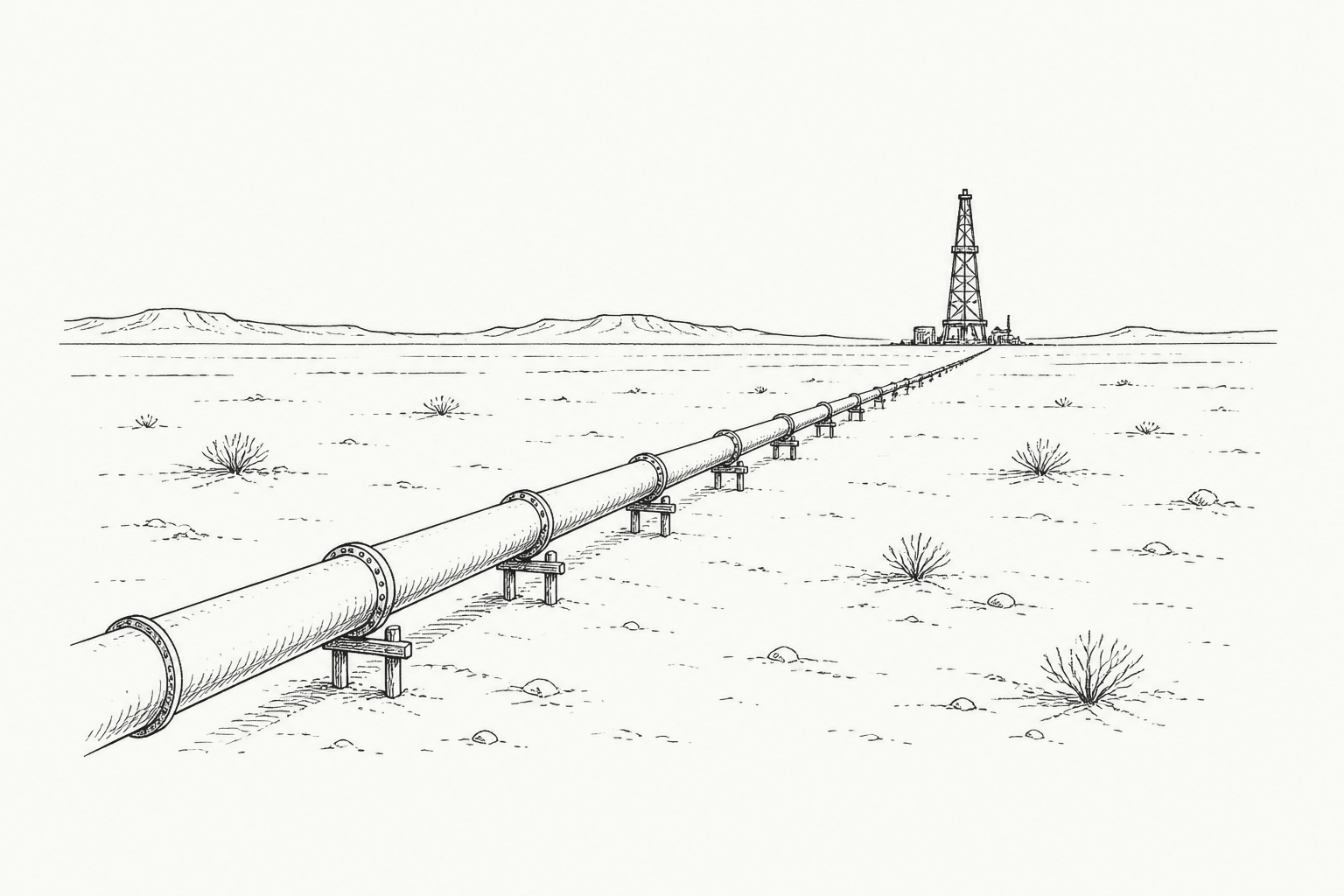
Aramco's East-West Pipeline ran at its full 7 million barrels a day in the quarter, Chief Executive Amin Nasser said. "Our East-West Pipeline, which reached its maximum capacity of 7.0 million barrels of oil per day, has proven itself to be a critical supply artery, helping to mitigate the impact of a global energy shock and providing relief to customers affected by shipping constraints in the Strait of Hormuz," Nasser said in a statement.
Profits grew 34 percent from the prior quarter. Brent crude rose 95 percent in the first three months of the year and is up 67 percent year-to-date, according to data Aramco cited. The company kept its base dividend at $21.9 billion for the quarter, up 3.5 percent from a year earlier, and reported a gearing ratio of 4.8 percent.
On the water
The Sunday strike off Qatar caused a small fire that was extinguished with no casualties, the United Kingdom Maritime Trade Operations Centre said. No group has claimed responsibility. The incident follows a Friday Iranian missile attack on the United Arab Emirates and the U.S. tanker strikes the same day, which prompted Iran's Revolutionary Guard navy to warn that further American action would trigger "a heavy assault" on U.S. bases and ships in the region.
Iran has restricted traffic through the Strait of Hormuz while the U.S. enforces a blockade on Iranian ports, NPR reported. Britain is sending the HMS Dragon warship to the region, and France has positioned its aircraft carrier strike group in the Red Sea.
On the Street
Brent crude futures closed Friday at $101.29 a barrel, up about 1 percent on the day. U.S. West Texas Intermediate settled at $95.42. The market is now "fundamentally tighter" because of the supply shock, Halliburton CEO Jeffrey Miller told investors on the company's earnings call, with what was expected to be a 2026 surplus replaced by a substantial deficit.
Governments and companies are reordering their planning around what oilfield-services executives describe as a permanent reset. Baker Hughes CEO Lorenzo Simonelli told investors there will be "a rebuilding of global inventories above historical levels to ensure that energy security is at the foremost," and Exxon Mobil CEO Darren Woods said importers are reassessing dependence on a single chokepoint. The International Energy Agency has called the Hormuz disruption "the biggest energy security threat in history."
The sanctions package
The Friday designations target what Secretary of State Marco Rubio described as procurement and intelligence networks supporting Iran's military operations. "Included in today's actions are several China-based entities providing satellite imagery to enable Iran's military strikes against U.S. forces in the Middle East," Rubio said in a statement. The package also names entities the department said are sourcing raw materials for Iran's ballistic-missile and drone programs.
Rubio said Friday he was expecting an Iranian response that day to the 14-point framework, which Axios and other outlets have reported would lift the Hormuz blockade and resume nuclear talks. Iranian state media said Tehran is still studying the messages and has not delivered a reply. President Trump on Thursday called the latest exchanges of fire a "love tap" and said Iran wanted a deal.
The counterpoint
The partisan right-wing reporting that has framed Trump's pressure campaign as the lever forcing Tehran to the table is absent from the wires used here, and the substantive market-skeptic case is that today's Aramco beat understates the damage. Iran's blockade has cost the global market nearly a billion barrels of oil, CNBC reported, with the shortfall growing each day the strait stays closed, a level of disruption Aramco's pipeline cannot offset on its own. Iran's Revolutionary Guard warning of a "heavy assault" on U.S. bases, paired with the Sunday cargo-ship fire and Friday's UAE missile strike, suggests escalation risk that a record quarter for one Saudi exporter does not retire.
Iran is expected to deliver a formal answer to the U.S. proposal this week, according to Iranian state media, with Brent's next test the open of European trading Monday.