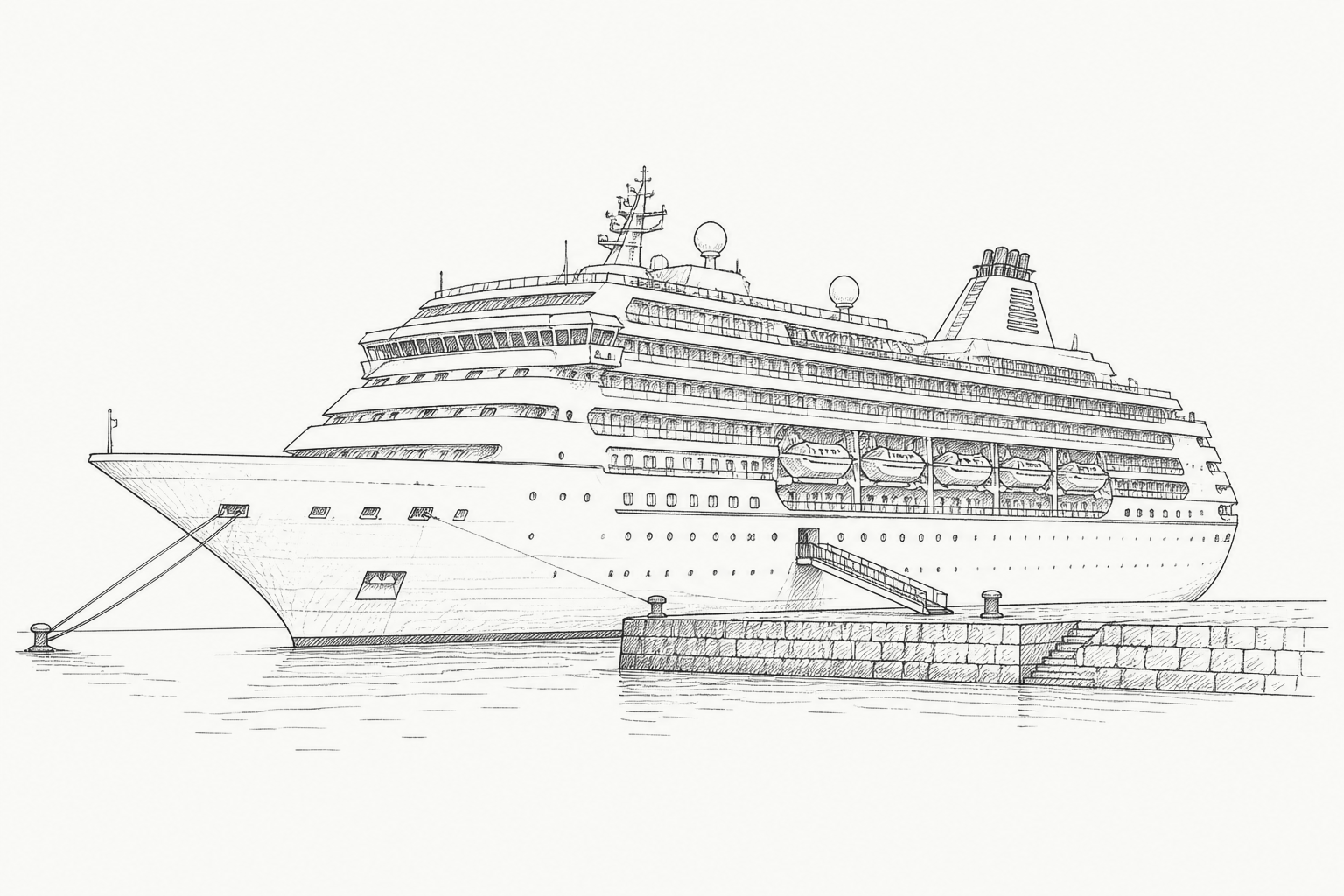
The MV Hondius docked in Tenerife early Sunday and passengers began stepping off the hantavirus-stricken cruise ship, ending a 33-day Atlantic crossing that has killed three people and sickened five others on board. The Centers for Disease Control and Prevention told reporters Saturday that "The risk to the American public remains 'extremely low,'" the agency's first sustained public messaging since the outbreak was confirmed May 3.
The Sunday arrival in the Canary Islands moves the response from sea to shore. More than 140 passengers and crew, drawn from roughly 20 nationalities, are being processed at a sealed area of port and routed to medical isolation, hotels or repatriation flights, including 17 Americans bound for the National Quarantine Unit at the University of Nebraska Medical Center.
What is new
The Hondius left Argentina on April 1 on what was billed as a 33-day journey and was diverted off Cape Verde a week ago after the World Health Organization confirmed the first laboratory case. The ship was expected over the weekend after a run north from Cape Verde and reached Tenerife in the early hours of Sunday morning, according to NPR. A Dutch couple and a German woman are the three confirmed deaths. WHO has confirmed eight cases in total.
WHO Director General Tedros Adhanom Ghebreyesus, in Tenerife to oversee the transfers, sought to draw a sharp line between this outbreak and the last global health emergency. "This is not another COVID-19. The current public health risk from #hantavirus remains low," he said.
The strain
The pathogen is the Andes virus, a New World hantavirus carried by South American rodents. PBS NewsHour, citing medical epidemiologists, said New World strains generally attack the lungs and prove fatal in roughly 40 percent of cases, against 15 percent or less for the Old World strains found in Europe and Asia. Symptoms start as flu-like illness and can escalate within days to respiratory and heart failure.
Investigators believe the chain began on land. The Dutch couple likely picked up the virus on a birdwatching excursion at an Argentine landfill before boarding, NPR reported. PBS reported that passengers had spent months touring Argentina and Chile before embarking, and that the incubation period of one to eight weeks meant infected travelers could feel healthy at boarding and fall ill at sea. Direct human-to-human transmission of hantavirus is rare, but epidemiologists have identified evidence that the Andes strain in particular can spread between people during sustained close contact in confined spaces — the conditions of a month at sea.
The American footprint
More than two dozen U.S. citizens were aboard. Seven have already returned home without symptoms. The 17 still in Tenerife will fly to Omaha for monitoring at the Nebraska quarantine unit. Five U.S. states had been tracking returning passengers as of Friday.
Counterpoint
The reassurance rests on a thin base. The Andes virus kills roughly four in 10 people it infects, the only hantavirus with documented person-to-person spread, and health authorities monitored 29 passengers who disembarked the Hondius on April 24, before anyone knew there was an outbreak to track. Both sources in this dossier — NPR and PBS NewsHour — lead with official reassurance; no opposing public-health critique of the U.S. or international response had surfaced in the body-tier reporting available by press time.
Spanish authorities said disembarkation and clearance of the ship are expected to take several days. The Nebraska monitoring window for the 17 Americans runs through the eight-week outer limit of the Andes incubation period, putting the next milestone in early July.