Iran's government on Thursday said it is formally reviewing the Trump administration's latest proposal to end the nearly three-month war, as Pakistan's army chief, Field Marshal Asim Munir, prepared to fly to Tehran to broker a deal and President Trump told reporters he was in no hurry to order a fresh round of strikes.
The burst of activity marks the most concrete diplomatic movement since talks in Islamabad collapsed last month, and it lands two days after the Senate advanced a war-powers resolution aimed at forcing Trump to wind down the conflict. Iranian Foreign Ministry spokesman Esmaeil Baghaei said Tehran had received Washington's views, the semiofficial ISNA news agency reported that the latest U.S. paper had "reduced the gaps to some extent" between the two sides, and U.S. Central Command separately said Marines boarded an Iranian-flagged oil tanker in the Gulf of Oman the day before. International Brent crude futures, which had drifted near $105 a barrel on Wednesday, traded 1.3 percent higher at $106.37 by Thursday morning in London as energy desks weighed the odds of a deal against another flare-up over the Strait of Hormuz.
What is new
Baghaei told the Iranian outlet Nour News, which is close to the country's Supreme National Security Council, that "We have received the views of the American side and are currently reviewing them". He said Pakistan was facilitating the exchange of messages and that the indirect talks were proceeding from Iran's original 14-point framework, which demands a definitive end to the war on all fronts including Lebanon, the release of frozen Iranian assets and an end to what Tehran calls piracy against its commercial shipping.
ISNA said Munir was expected in Tehran on Thursday for "talks and consultations" with Iranian authorities. Munir hosted the only direct U.S.-Iran negotiations since the war began on Feb. 28, when Vice President JD Vance traveled to Islamabad last month; those talks broke down after Iran accused Washington of excessive demands. Iranian lawmaker Fada Hossein Maleki told state television that Munir would arrive carrying a new message from the U.S.
Trump sets the clock
Speaking to reporters at Joint Base Andrews on Wednesday afternoon, Trump said he was prepared to give Tehran a short window. "If I can save war by waiting a couple of days, if I can save people being killed by waiting a couple of days, I think it's a great thing to do," he said. Asked how long he would hold off, he replied, "It could be a few days, but it could go very quickly."
He coupled the patience with a threat. "Believe me, if we don’t get the right answers, it goes very quickly. We’re all ready to go," Trump said. Before boarding Air Force One to deliver a commencement address at the U.S. Coast Guard Academy, he told reporters, "We're in final stages of Iran", adding that the United States would "either have a deal or we're going to do some things that are a little bit nasty". Al Jazeera characterized the president's posture as putting the negotiations at the "borderline" between an agreement and renewed bombing.
Iranian Foreign Minister Abbas Araghchi told state media his ministry was preparing for both outcomes. "Wherever it is necessary to fight, we will fight, and wherever it is necessary to negotiate, we will negotiate," Araghchi said.
Pressure on the water
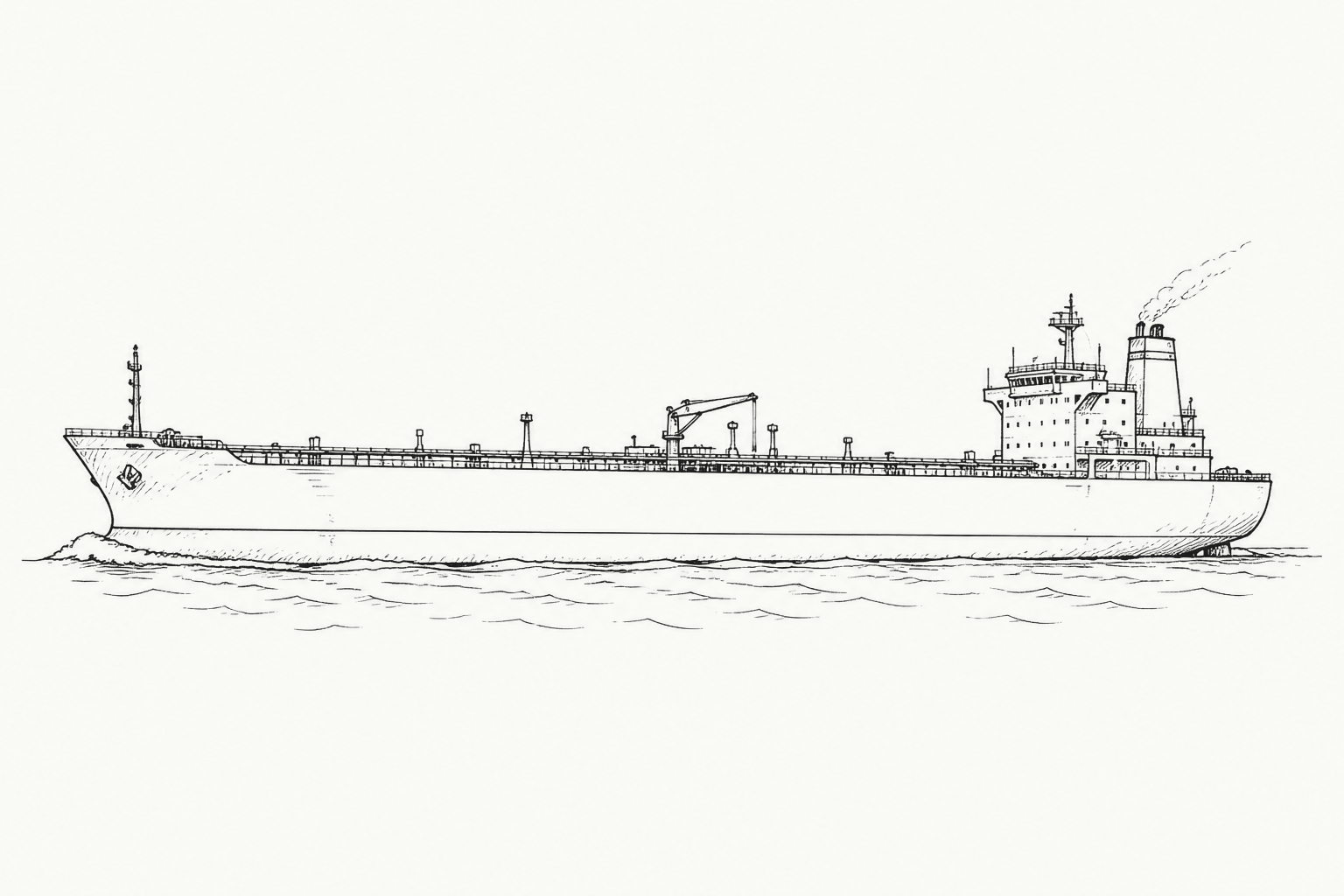
U.S. Central Command said it boarded the M/T Celestial Sea in the Gulf of Oman after the vessel was suspected of trying to reach an Iranian port, the fifth commercial ship boarded since the administration imposed a naval blockade on Iranian ports in mid-April. The U.S. military says 1,550 vessels from 87 countries are stranded in the Persian Gulf because of the dual blockades. Iran has continued to charge fees on tankers transiting the Strait of Hormuz, the chokepoint that carried roughly 20 percent of the world's oil and liquefied natural gas before the war. South Korea confirmed this week that one of its tankers passed through in coordination with the Iranian navy.
Iran's Islamic Revolutionary Guard Corps said in a statement Wednesday that any resumption of U.S. or Israeli strikes would invite retaliation outside the Middle East. "If aggression against Iran is repeated, the promised regional war will extend beyond the region this time," the IRGC said.
The counterpoint
Morgan Ortagus, a former Trump Middle East envoy, told Fox News Digital that Iran's review should be read with skepticism. "It’s the tactic of the regime to stall, to draw negotiations, to buy time," Ortagus said, urging the president not to grant Tehran an indefinite runway. She argued the administration holds more leverage than its predecessors because U.S. and Israeli strikes have, in her phrasing, seriously degraded Iran's capabilities. At the United Nations on Thursday, Iran's permanent representative, Amir Saeid Iravani, accused the Security Council of failing to "discharge its responsibilities" in the face of Trump's repeated threats to bomb Iran "back to the Stone Age".
What is next
Munir's meetings in Tehran will determine whether Iran's response closes enough of the gap to be presented as the memorandum of understanding that ISNA said Pakistan is trying to get Tehran to sign. Another swing in Brent will signal which way the energy market thinks the shuttle is going.