SpaceX launched the first Version 3 Starship on Friday from its Starbase site in South Texas, deploying mock Starlink satellites from space but losing multiple engines on the Super Heavy booster during descent, two days after the company filed paperwork for what could be the largest stock-market debut in history.
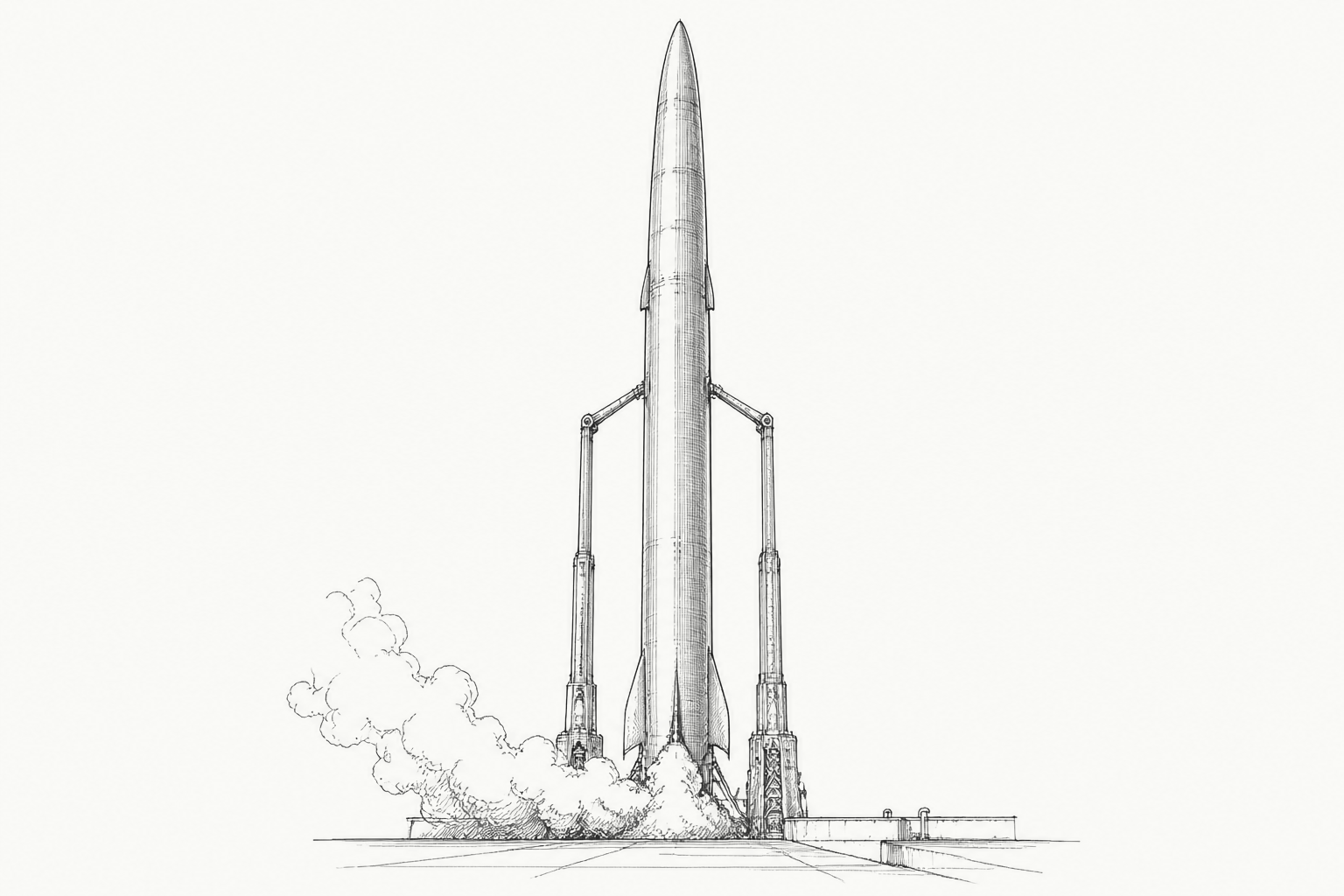
The 407-foot rocket cleared the pad at about 6:30 p.m. Eastern, generating up to 18 million pounds of thrust from 33 methane-burning Raptor engines and putting an upgraded upper stage on a sub-orbital arc that ended with a vertical splashdown in the Indian Ocean. The flight, the 12th for the Starship program, gave Elon Musk a usable demonstration to take into next month's planned initial public offering, even as the booster missed its recovery point and the upper stage fell short of propulsion targets.
What worked
Once in space, Starship released 22 Starlink simulators from what CBS News called "an upgraded Pez-like dispenser," with two of the dummies carrying cameras that beamed back images of the spacecraft. The ship endured re-entry "in apparently good shape with little of the thermal damage seen on previous flights," CBS reported, executed a banking maneuver, splashed down vertically, then tipped over and exploded, an outcome SpaceX had described as expected.
NASA Administrator Jared Isaacman, who paid to command two earlier SpaceX flights before joining the agency, watched from Starbase. In a social media post, Isaacman congratulated SpaceX and Musk for "a hell of a V3 Starship launch. One step closer to the Moon...one step closer to Mars." Musk, on his X platform, said the company "scored a goal for humanity."
What did not
One of the Super Heavy stage's 33 Raptor 3 engines shut down early during the climb, CBS News reported, and additional engines failed to fire when the booster tried to reverse course for a splashdown off the Texas Gulf Coast. The stage dropped into the Gulf well short of its target. CNBC reported that anomalies during the engine relight sequence destroyed "a significant part of the Superheavy aft" and caused a loss of control.
On the upper stage, one of three vacuum-optimized Raptors also shut down prematurely. The flight computer compensated by running the remaining five engines longer than planned, and a planned in-space Raptor restart was not attempted.
The IPO backdrop
Musk announced the IPO two days before the launch, and SpaceX disclosed its prospectus on Wednesday. CNBC reported that the company expects to raise around $75 billion next month, after a February valuation of $1.25 trillion when SpaceX merged with Musk's xAI. The James St. Journal reported Thursday that the filing showed a $2.6 billion operating loss on $18.7 billion in 2025 revenue, with shares to trade on Nasdaq as SPCX.
The prospectus describes Starship as a vehicle "designed to deliver 100 metric tons to Earth's orbit in a fully reusable configuration while enabling rapid turnaround times akin to commercial aviation" — language that frames the rocket as the engine of SpaceX's plan to expand Starlink and capture government and commercial launch contracts.
The NASA stakes
NASA is paying SpaceX billions of dollars to develop a Starship variant to land Artemis astronauts on the moon, with a crewed landing targeted for 2028. Jeff Bezos' Blue Origin is building a competing lander, Blue Moon, that has not yet flown. Before NASA attempts to land crew, both companies must first complete an uncrewed lunar landing.
Friday's launch was Starship's first in seven months, following what CNBC described as "a string of explosions and other setbacks in early 2025 that disrupted air travel due to falling debris."
The counterpoint
The partial booster failure undercuts the marketing case Musk has built around full reusability. CNBC reported that the company missed engine-performance targets it has said are necessary "to know its revamped rocket and engines are ready to conduct safe flights to orbit and back." Right-leaning outlets did not file on the launch among today's reviewed reporting, and SpaceX has not detailed which engine modes caused the shutdowns.
SpaceX has said the first in a series of orbital refueling tests, a maneuver Starship must master before any moon mission, is planned before the end of the year.