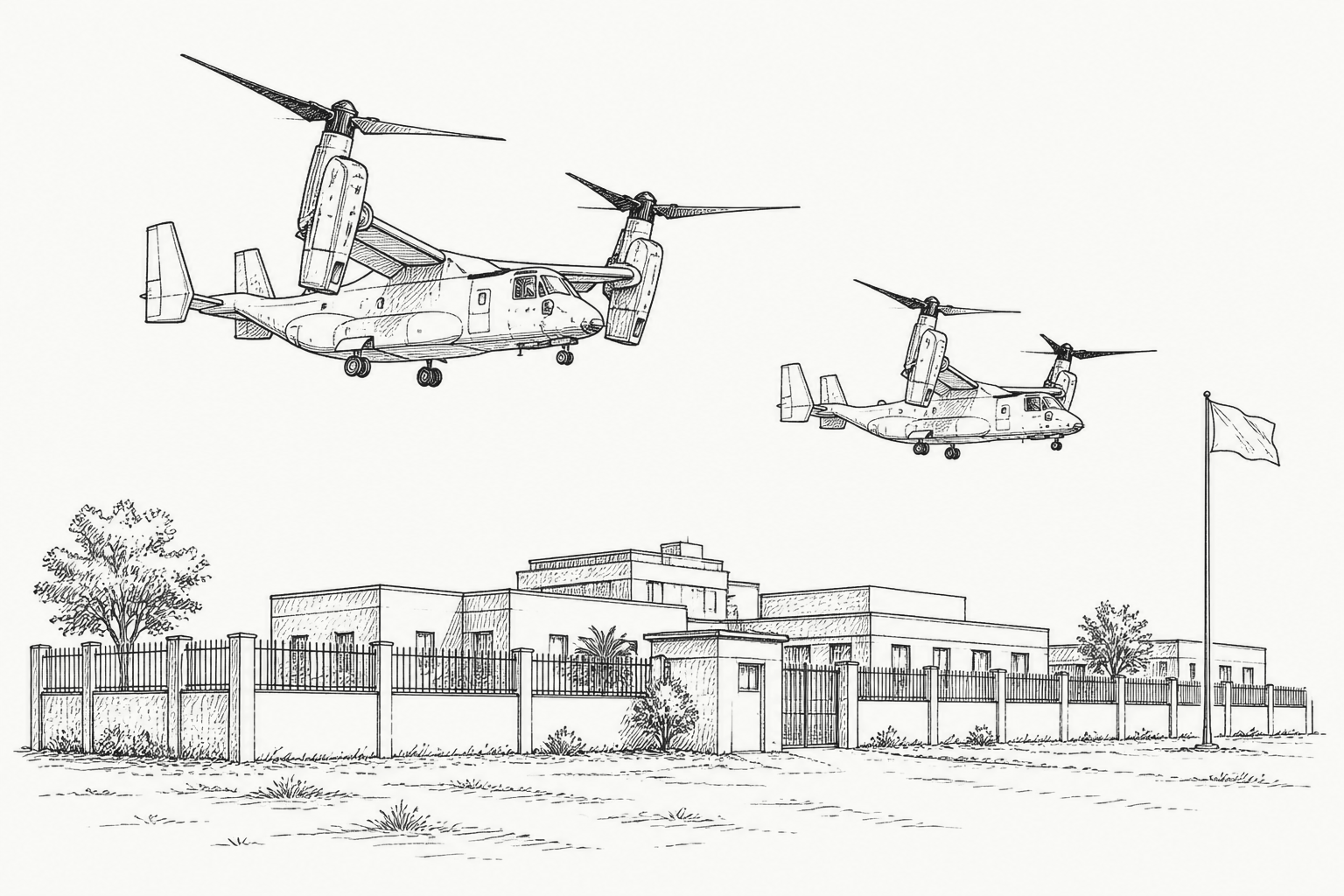
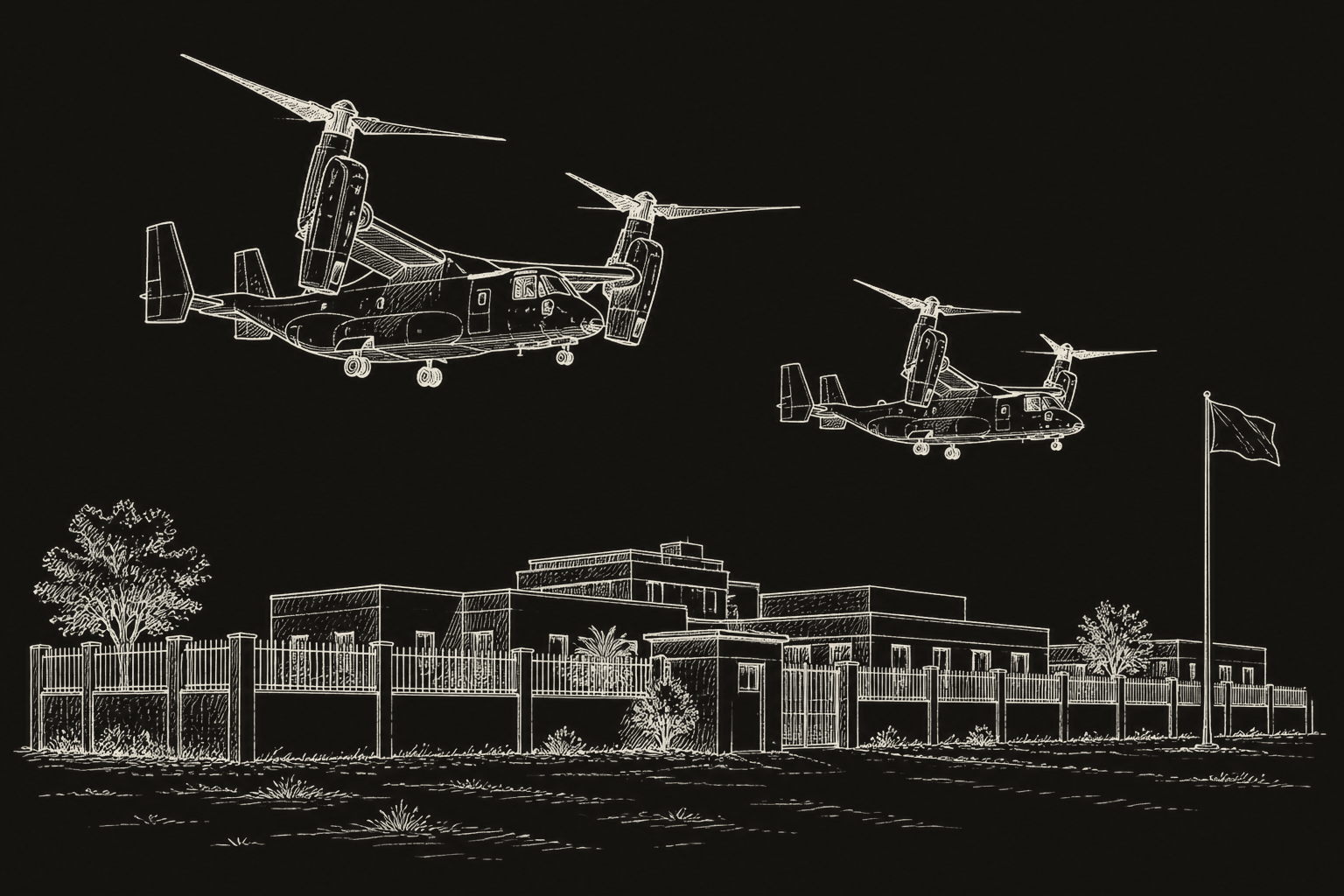
Two U.S. Marine Corps Osprey aircraft flew over the recently reopened U.S. Embassy in Caracas on Saturday and set down in its parking lot, the first publicly announced American military exercise in Venezuela's capital since elite forces captured then-President Nicolás Maduro in January. Hours later in Panama City, Nobel laureate María Corina Machado told reporters she will run for president again and return from exile by the end of 2026.
The back-to-back announcements widen a U.S. pressure posture in Latin America that pairs a reopened embassy and a forward-deployed amphibious group in the Caribbean with an escalating rhetorical campaign against Havana. They also expose a contradiction: senior administration officials publicly praise Maduro's successor, acting President Delcy Rodríguez, even as Marines drill at the embassy and the opposition figure whose stand-in defeated Maduro in 2024 prepares to come home.
What happened in Caracas
The Ospreys bore the markings of Marine Medium Tiltrotor Squadron 263, the unit deployed aboard the amphibious assault ship USS Iwo Jima in the Caribbean, according to PBS NewsHour. Marine Gen. Francis Donovan, head of U.S. Southern Command, arrived in one of the aircraft for his second Caracas visit this year and met with senior Venezuelan officials.
"Ensuring the military's rapid response capability is a key component of mission readiness, both here in Venezuela and around the world," the embassy said on Instagram. Venezuelan Foreign Minister Yván Gil previewed the drill earlier in the week, saying it was meant to prepare "in the event of medical emergencies or catastrophic emergencies." A few dozen protesters gathered with a Venezuelan flag reading "No to the Yankee drill."
The last U.S. military aircraft to fly over Caracas before Saturday did so on Jan. 3, when commandos rappelled from helicopters and captured Maduro and his wife, Cilia Flores. Both have pleaded not guilty to drug-trafficking charges in New York.
Machado's calendar
Machado, in exile since December and sidelined by the White House in favor of Rodríguez, said an election held under democratic conditions would require seven to nine months of planning, including neutral electoral authorities and updated voter rolls. Venezuela's constitution requires a vote within 30 days when a president becomes "permanently unavailable." The Trump administration has dampened calls for one.
"I will be a candidate, but there may be others, of course," Machado said.
Cuba in the frame
The Venezuela moves come as Washington widens pressure on Havana, the subject of Thursday's lead in this paper, in which Secretary of State Marco Rubio called Cuba a national security threat. The administration's earlier cut to fuel flows has deepened blackouts that already ran 20 hours or more a day outside Havana, according to NBC News. A small bag of charcoal costs about $1; the average state salary is about $13 a month.
The counterpoint
Today's dossier contains no right-leaning coverage of the drill or Machado's announcement; the framing that the pressure campaign is overdue and proportionate to two hostile governments in the hemisphere is not represented. Rodríguez has thrown open Venezuela's oil industry to U.S. investment at a time of surging prices tied to the war in Iran, giving Washington a transactional reason to slow-walk Machado's election.
Machado said she expects to be home before the end of 2026.