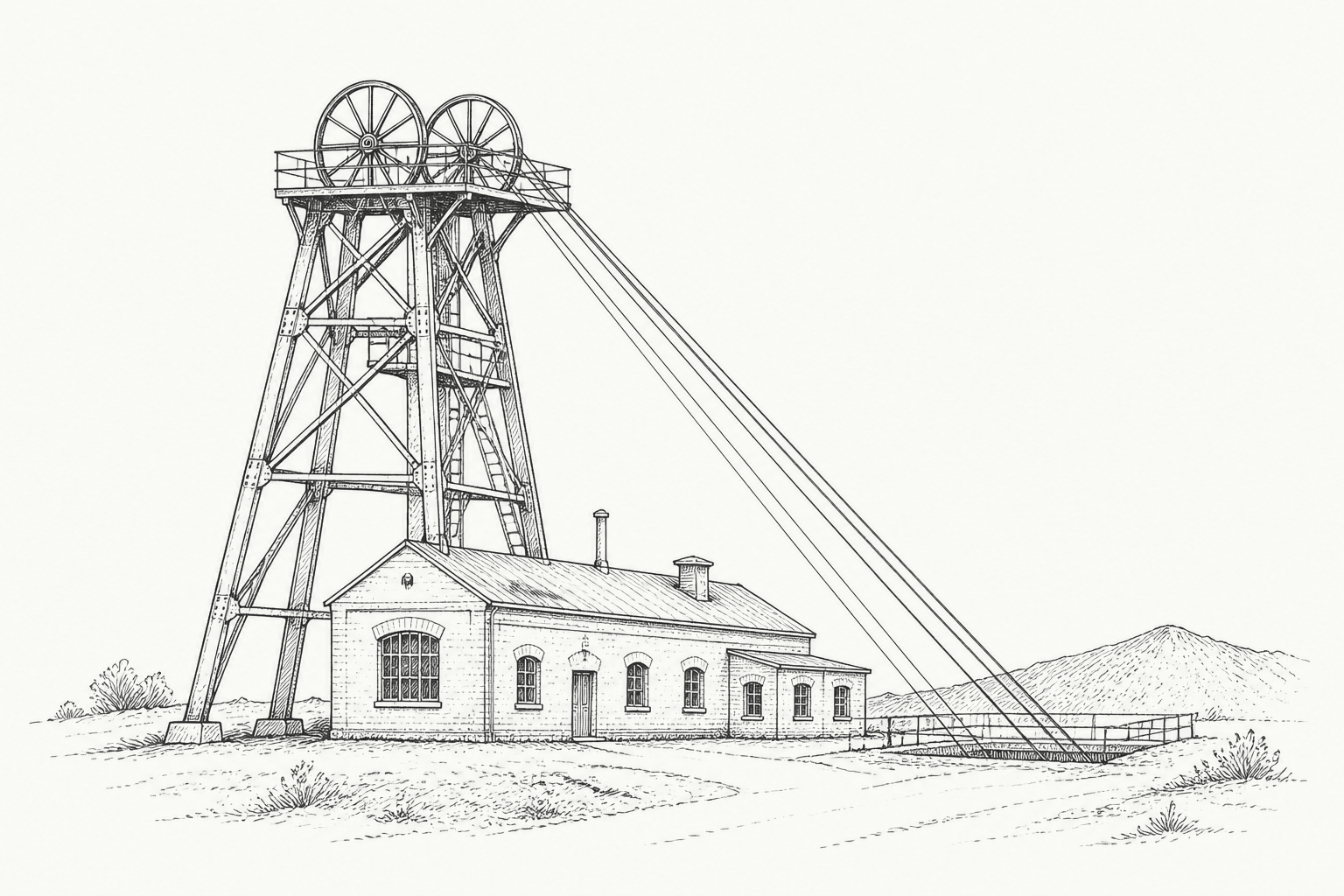
A gas explosion Friday evening at the Liushenyu coal mine in Changzhi, in China's northern Shanxi province, killed at least 82 workers and hospitalized more than 120, local officials said Saturday, making it the country's deadliest mining accident since 2009.
Two miners remained missing as of a late-Saturday news conference, where authorities revised down an earlier toll of 90 reported by state broadcaster CCTV. The state-run Xinhua News Agency, the primary channel for official information on the disaster, said the mine's operator committed "serious violations" of the law, without specifying what they were.
What investigators say
Local officials described the scene in the hours after the blast as "chaotic" and cautioned that initial figures were not definite. Many of the injured were hurt by toxic gas, CCTV reported. Rescue crews numbering in the hundreds, along with medical personnel, were dispatched to the site, but blueprints provided by the mine did not match its actual layout, hampering the search, the broadcaster said.
Xinhua reported that those responsible for the company involved in the accident have been "placed under control," citing the local emergency management bureau. A team sent by the State Council, the equivalent of China's cabinet, will conduct what a separate Xinhua dispatch called a "rigorous and uncompromising" probe.
Chinese President Xi Jinping, according to Xinhua, called for an all-out rescue effort, a "thorough investigation" and accountability "in accordance with the law."
Operator and warning
The Liushenyu mine, run by Shanxi Tongzhou Coal & Coke Group, has an annual production capacity of 1.2 million tons. China's National Mine Safety Administration in 2024 placed the mine on a national list of disaster-prone sites flagged for having "high gas content" — the same hazard implicated in Friday's blast.
Wang Yong, one of the hospitalized miners, told CCTV he smelled sulfur "like firecrackers" and saw smoke before losing consciousness.
"I told people to run," Wang said. "As I ran, I saw people being choked by the smoke. And then I blacked out."
Province under strain
Shanxi, larger than Greece and home to roughly 34 million people, is China's dominant coal-producing region. Its mines yielded 1.3 billion tons last year, nearly a third of the national total. Coal still supplies the bulk of China's electricity even as Beijing pours money into wind, solar and nuclear capacity, a tension that has left aging mines running flat out to meet baseload demand.
Friday's death toll exceeds the 53 killed in a February 2023 open-pit collapse in Inner Mongolia and is the highest since November 2009, when an explosion at a Heilongjiang mine killed 108, according to state media tallies cited by Xinhua.
Counterpoint
Almost every figure in the public account so far — the death toll, the injury count, the violations finding, the miner's quote — has come through Xinhua, CCTV or local officials answering to them. Independent verification on the ground is limited. The revision from 90 dead to 82 within hours illustrates how malleable the early numbers are, and there is no right-leaning Western source in the day's reporting to test the official narrative against. The disaster also sits awkwardly against Xi's repeated assurances that mine safety has improved under tighter Communist Party oversight; the State Council investigation is now the test of whether the "high gas content" flag attached to Liushenyu in 2024 was followed by any enforcement.
The local emergency management bureau has not said when it will release the names of the dead, the cause of the ignition or the status of the executives now in custody. The next scheduled update from Changzhi authorities is expected within days.