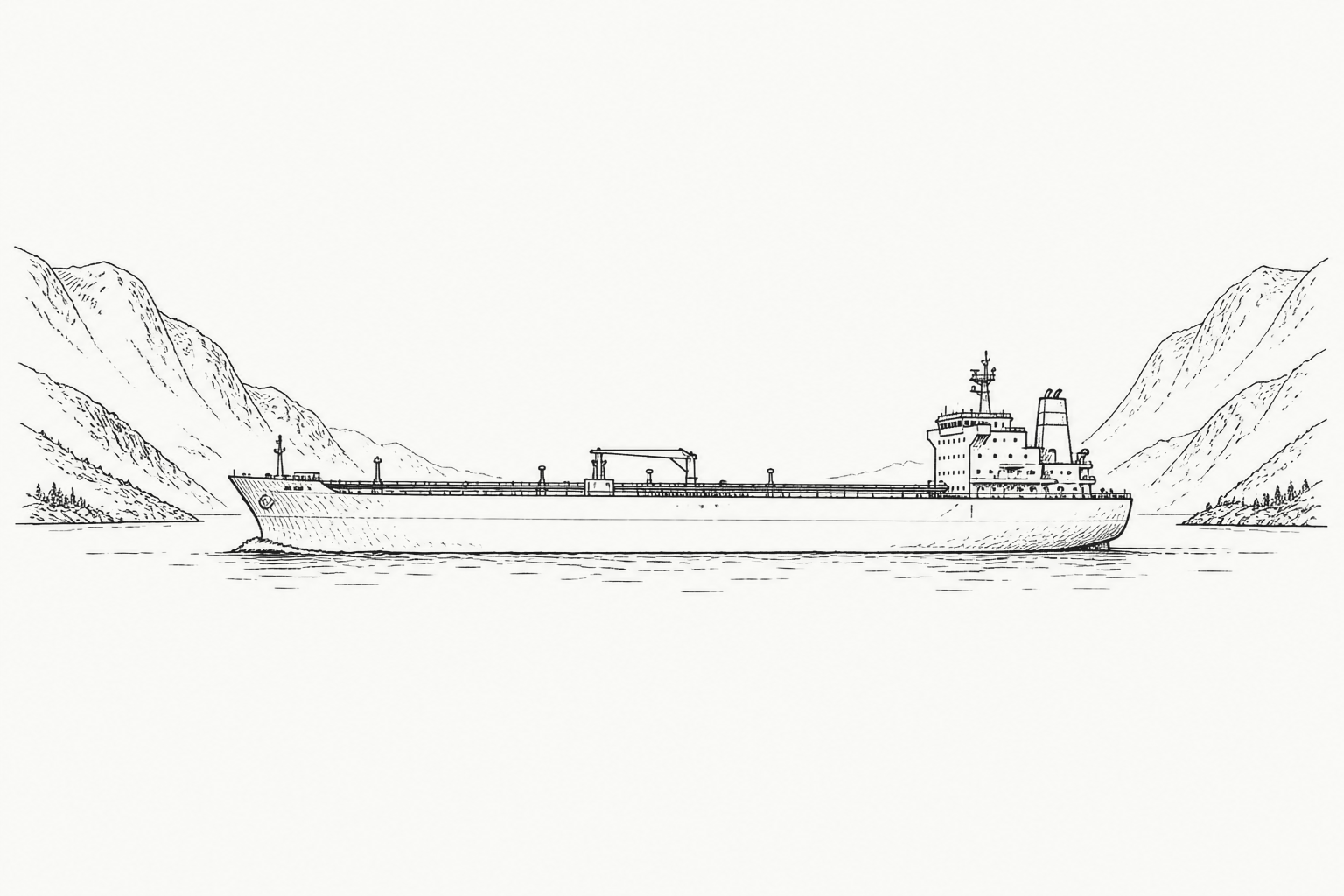
President Trump said Saturday that an agreement to end the nearly three-month war with Iran and reopen the Strait of Hormuz had been "largely negotiated," and Secretary of State Marco Rubio told reporters in New Delhi on Sunday that the world could get "good news" within hours.
The announcement, made on Trump's Truth Social account after Oval Office calls with the leaders of Saudi Arabia, the United Arab Emirates, Qatar, Pakistan, Turkey, Egypt, Jordan, Bahrain and Israel, would convert a fragile April 8 ceasefire into a formal end to hostilities and begin to restore traffic through the chokepoint that carried roughly one-fifth of the world's seaborne oil before the war. Two days earlier, House Republican leaders pulled a Democratic war powers resolution rather than lose it, deferring a vote to June 2.
"An Agreement has been largely negotiated, subject to finalization between the United States of America, the Islamic Republic of Iran, and the various other Countries," Trump wrote, describing the deal as a "Memorandum of Understanding pertaining to PEACE." He said his conversation with Israeli Prime Minister Benjamin Netanyahu, who has pressed for renewed strikes, went "very well."
On the table
The framework would unfold in two phases, according to Iran's semiofficial Tasnim News Agency and U.S. accounts relayed by Reuters and Axios. The first 30 days would cover the Strait of Hormuz and an end to fighting on all fronts, including Lebanon. A second 30-day window, extendable by mutual agreement, would tackle Iran's nuclear program. Tasnim reported that "the number of ships allowed to pass would be restored to pre-war levels within 30 days" and that the U.S. naval blockade of Iranian ports must be lifted in the same period.
Iranian Foreign Ministry spokesperson Esmail Baghaei described the draft to state media as a "framework agreement" that would set broad principles before details are negotiated over 30 to 60 days. Baghaei said lifting sanctions on Tehran "has explicitly been included in the text and remains our fixed position," and that nuclear issues are not part of the current text.
Where it could break
Iran's Fars news agency, close to the Islamic Revolutionary Guard Corps, called Trump's account of a reopening inconsistent with reality, reporting that the strait would remain under Iranian management and that traffic would resume in stages rather than fully reopen. Iran's parliament speaker, Mohammad Bagher Qalibaf, the lead negotiator at face-to-face talks with the U.S. in Islamabad last month, said Saturday that Iran has rebuilt its military assets and that any resumption of attacks would be "more crushing and more bitter" than the war's opening days.
The U.S. side has its own unfinished business. Trump made no mention of Iran's highly enriched uranium stockpile, which his administration has repeatedly cited as central to ending the conflict, and Reuters quoted a senior Iranian source as saying Tehran has not agreed to surrender the material. The New York Times reported the draft contains an "apparent commitment" by Iran never to pursue nuclear weapons, with the handover mechanics left for later.
The economic stakes
Iran's effective closure of the strait after the Feb. 28 U.S.-Israeli attack set off what Gulf states have called the worst global energy crisis in decades, pushing U.S. inflation to multiyear highs and reshaping rate-cut expectations at the Federal Reserve. Brent crude fell to $110.01 a barrel on May 19 after Trump shelved a planned strike, and the 10-year Treasury yield stood at 4.57 percent on Friday as Kevin Warsh was sworn in as Fed chair. A durable reopening would relieve pressure on energy importers from Japan to India and remove a major upward force on consumer prices.
Around the table
Pakistani army chief Field Marshal Asim Munir, the central mediator, met in Tehran this week with President Masoud Pezeshkian, Foreign Minister Abbas Araghchi and Qalibaf, with Qatar sending a senior official to support the effort. Turkish President Recep Tayyip Erdogan's office said Turkey "stands ready to provide every kind of support during the implementation phase of a potential agreement with Iran." Pakistani Prime Minister Shehbaz Sharif called Trump's round of regional calls "a very useful and productive" exchange.
The two sides remain, in the Iranian foreign ministry's phrase quoted by CNBC, both "very far and very close." Rubio, on his first official visit to India, framed the gap more optimistically. "Some progress has been made, significant progress, although not final progress has been made," Rubio said. "I do think perhaps there is the possibility that in the next few hours the world will get some good news."
The missing view
Today's reporting draws on center wires and an Arab broadcaster; no conservative outlet had published a substantive critique of the draft by press time. The closest skeptical voice in the dossier comes from Trita Parsi of the Quincy Institute, who told Al Jazeera the memorandum included no major substantive concessions from either side but was at least a sign of willingness to move toward a broader deal that, if completed, "would likely be a bigger deal than the Obama agreement in 2015." Israeli officials had not publicly responded by press time, and Setareh Sadeqi of the University of Tehran told Al Jazeera the challenge for Trump is whether he can defy Israeli interests and push the deal through.
Trump said final details would be announced shortly. Iranian officials told mediators they expect to know within three or four days whether the framework holds. The House war powers vote is scheduled for June 2.