Uganda on Wednesday ordered the closure of its border with the Democratic Republic of the Congo, defying World Health Organization guidance, as the Trump administration said Americans exposed to Ebola while abroad will be sent to a new quarantine facility under construction in Kenya rather than flown home.
The twin moves harden a containment perimeter around an outbreak of Bundibugyo, a rare strain of Ebola with no approved medicines or vaccines, that the WHO says is outpacing Congolese health authorities. They also mark a break from the U.S. response a decade ago, when more than half a dozen infected Americans were brought home for care.
What is new
Uganda's case count rose to seven — up from the five JSJ reported Saturday — and Kampala paired the new figure with a hard border closure. Dr. Diana Atwine of the Ugandan Ministry of Health said crossings will be authorized only for outbreak response, humanitarian work, cargo or security, and that anyone admitted under those exceptions will face mandatory isolation for 21 days.
The WHO has discouraged such closures, warning that they "push the movement of people and goods to informal border crossings that are not monitored, thus increasing the chances of the spread of disease." The Uganda-Congo border runs several hundred miles and is crossed daily by traders and families on foot.
In eastern Congo, suspected cases are nearing 1,000 with at least 220 suspected deaths, the country's health ministry said, with 101 cases confirmed and more than 3,000 contacts under investigation. The CDC and WHO put the confirmed total at 121 with 17 deaths. WHO Director-General Tedros Adhanom Ghebreyesus called Wednesday for a ceasefire in eastern Congo, writing that "attacks on health facilities make tracking cases and their contacts nearly impossible."
The Kenya plan
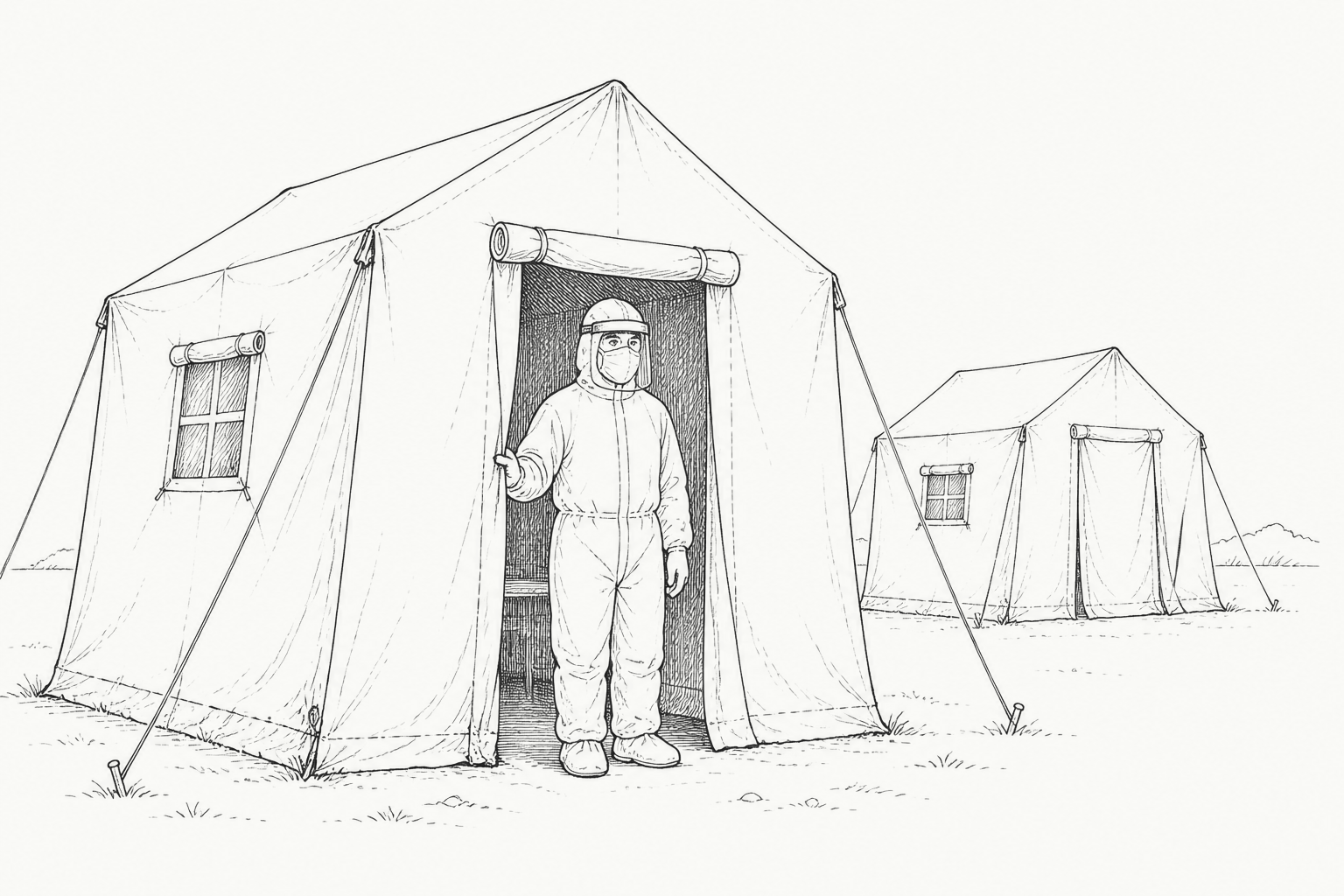
The quarantine facility, first reported by The Wall Street Journal, is being set up by the Departments of Defense, State and Health and Human Services to spare Ebola patients an hourslong medical evacuation to the U.S., an administration official told the Associated Press. The site within Kenya and the timeline were not disclosed, and Kenyan Health Minister Aden Duale said any arrangement would be "guided by Kenya's national laws."
Secretary of State Marco Rubio told reporters at a Wednesday Cabinet meeting that the government was working to contain the crisis to Congo. "We cannot and will not allow any cases of Ebola to enter the United States," he said. The CDC is funneling returning travelers from Congo, Uganda and South Sudan through Houston Bush, Washington Dulles and Hartsfield-Jackson Atlanta for enhanced screening, with John F. Kennedy International to be added Thursday.
The objection
Dr. Craig Spencer, the Brown University physician who survived Ebola in 2014, told the AP he does not expect the Kenya facility to match the care available at dedicated U.S. units, calling the policy "a moral abdication of what this country owes its own." Aid groups inside Congo say they remain short of face shields, suits, testing kits and body bags, shortages the AP attributed in part to last year's U.S. aid cuts. Congressional Republicans had not publicly responded to the new Kenya plan by press time.
Congo's health ministry on Wednesday released its first Bundibugyo survivor from a treatment center in Rwampara, in the heart of the outbreak.