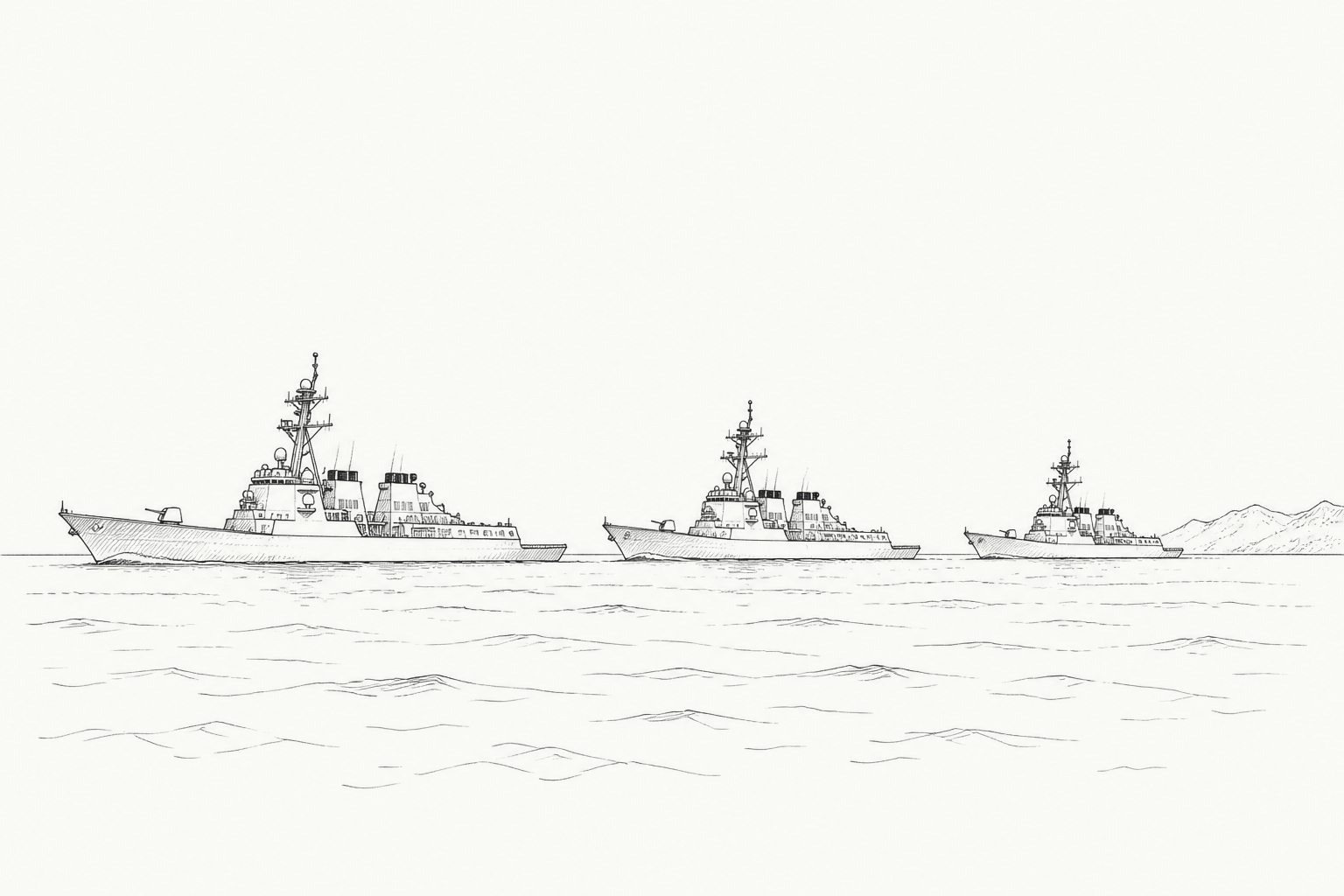

President Trump said the United States will retrieve and destroy Iran's stockpile of highly enriched uranium with or without an agreement from Tehran, telling NBC News' "Meet the Press" in an interview aired Sunday that American forces are prepared to collect the material on their own. The remarks landed hours after Iranian missiles and drones aimed at U.S. bases in Bahrain and Kuwait were intercepted early Saturday and the U.S. military struck Iranian coastal radar on Qeshm Island and near Sirik, the heaviest exchange of fire since the April 8 ceasefire took effect.
The twin developments hardened the terms of a war that on Sunday entered its 100th day. Trump's insistence that the uranium will come out by force if necessary, paired with a Treasury Department move to steer frozen Iranian assets to Gulf allies rather than Tehran, narrows the diplomatic space negotiators pried open a week ago when they tentatively agreed to extend the ceasefire by 60 days. Energy prices remain elevated, U.S. troops in the region number about 50,000, and Iran's new supreme leader, Mojtaba Khamenei, has yet to publicly endorse the framework on the table.
What Trump said
"If we make a deal that now we're friendly, we'll all go together. It'll be our equipment. We'll take it out and destroy it, whether it's on-site or whether we take it off-site," Trump told moderator Kristen Welker in the interview, which was conducted in a Wisconsin barn before a farm roundtable. "Now, if we don't make a deal, then we're going to take them out militarily very harshly."
Trump said negotiators are "very close" to a pact but that he is pressing Iran to accept language barring it from buying or acquiring nuclear material, not merely developing it. He put Iran's remaining missile stockpile at "21%, 22%" of prewar levels and said any unfreezing of Iranian assets "comes after" Tehran signs and complies.
"Look, we have totally destroyed their military," Trump said. He told Welker the 50,000 U.S. troops deployed to the region will stay until "completion" of the conflict, adding that the deployment is cheap to sustain.
Saturday's exchange
Bahrain's air defenses intercepted three Iranian missiles early Saturday, the government said, and U.S. Central Command shot down attack drones launched toward the Strait of Hormuz before striking Iranian coastal surveillance radar at Goruk and on Qeshm Island. Iran's Revolutionary Guard said its missile salvo targeted the Ali Al Salem air base in Kuwait and the U.S. Navy's 5th Fleet in Bahrain, the state-run IRNA news agency reported. The U.S. military reported no harm to American personnel.
CENTCOM said the drones "posed an immediate threat to regional maritime traffic." Iran's Foreign Ministry called the U.S. radar strikes a ceasefire violation, saying the sites "are tasked with safeguarding the country's border security and ensuring the security of navigation in international waterways," and accused Washington of disregarding international law. The Gulf Cooperation Council's secretary general, Jasem Mohamed Albudaiwi, condemned the Iranian salvo as "a dangerous and irresponsible escalation, a blatant violation of all international laws and norms."
The exchange was the sharpest since Iranian drones damaged a passenger terminal at Kuwait's main airport earlier in the week, killing one person.
The frozen-assets pivot
A person familiar with Treasury Secretary Scott Bessent's thinking said the department is weighing whether to allow Gulf allies to tap roughly $24 billion in frozen Iranian assets abroad to pay for war damages, and has directed staff to gather repair-cost estimates from those governments. Iran had been seeking access to the same funds as part of a settlement.
Miad Maleki, a senior fellow at the Foundation for Defense of Democracies and a former Iranian sanctions expert at the Treasury, said the shift inverts a concession Tehran had treated as central to any deal. The U.S. message, Maleki said, is that "we're going to take these funds from you, and we're going to help Gulf states to take it," rather than release them to Tehran. He added that some Gulf states may hesitate for fear of Iranian retaliation.
Hill and polls
The House on June 3 passed a war powers resolution ordering Trump to halt military action against Iran, 215 to 208, with four Republicans joining Democrats. The measure faces a 60-vote Senate hurdle and would require a two-thirds override of an expected veto, a bar no war powers resolution has cleared, PolitiFact reported. A recent Economist/YouGov survey found 68 percent of adults, including 55 percent of 2024 Trump voters, want the U.S. to make a deal as quickly as possible.
The counterpoint
The day's reporting tilted toward wire and lean-left outlets, and conservative commentators and administration allies on the right had not publicly responded to the uranium framework or the frozen-assets plan by press time. Inside Iran, deputy foreign minister Kazem Gharibabadi told state broadcaster IRIB that Tehran "does not wait for the green light of any country" and will not accept any understanding unless its concerns are resolved, suggesting the gap Trump described as small remains material. Pakistani interior minister Mohsin Naqvi arrived in Tehran on Saturday to mediate.
What to watch
The tentative 60-day ceasefire extension reached a week ago is still unsigned. Trump said any meeting with the younger Khamenei would happen only if Iran requests one, and Bessent's team is awaiting damage tallies from Gulf capitals before moving on the frozen-assets plan.