American and Iranian forces fired directly at one another for the first time since an April ceasefire after U.S. jets struck nearly 20 sites inside Iran overnight Tuesday, Iran answered with drone and missile attacks on U.S. bases in three Gulf and Levant countries, and President Trump told Tehran on Wednesday morning that it would now have to "pay the price."
The exchange marks a qualitative escalation in a war that hit its 103rd day Wednesday. Until this week, U.S.-Iran fire had been mediated through proxies, naval intercepts and tanker seizures; the past 48 hours have produced an open, retaliatory loop between Washington and Tehran that risks pulling Jordan, Bahrain and Kuwait further into the conflict and lifting oil prices into a market already braced for a Strait of Hormuz disruption.
What Shifted
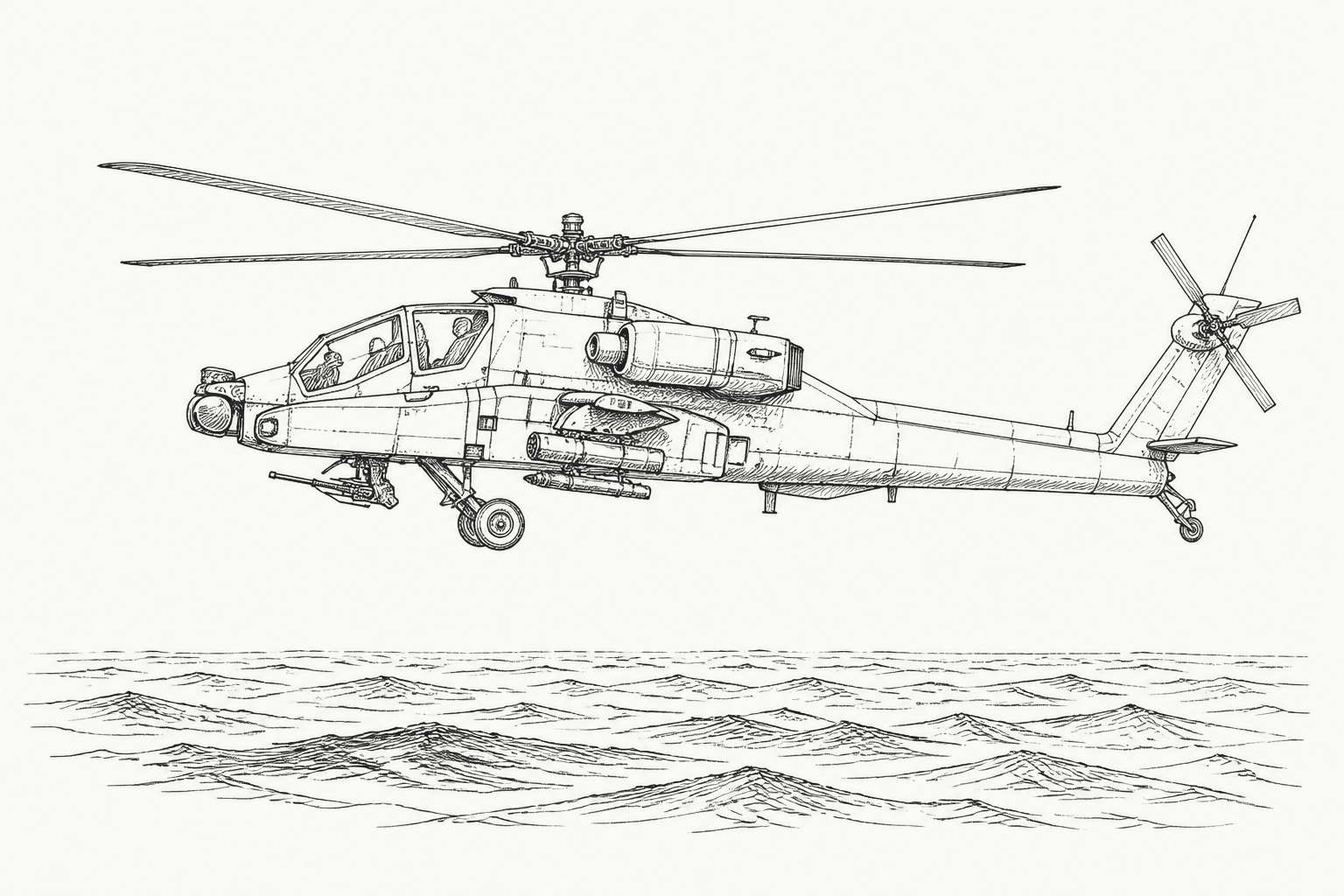
The sequence began Monday evening, when a U.S. Army AH-64 Apache helicopter went down near the Strait of Hormuz. U.S. Central Command said its strikes inside Iran were carried out "in response to yesterday's downing of a U.S. Army Apache helicopter," hitting Iranian air defenses, radar sites and ground control stations across nearly 20 targets, according to a U.S. official cited by CBS News. The U.S. military described the operation as "self-defence strikes," Al Jazeera reported, citing the Pentagon.
Iran has not directly claimed responsibility for the helicopter shootdown, CNBC reported, and Iranian state broadcaster IRIB said no offensive military operations had been carried out in the strait in the prior 24 hours.
Asked about the U.S. response, Trump told ABC News, "I believe the response should be very strong, very powerful."
Tehran Answers
Iran's Islamic Revolutionary Guard Corps said it launched drone and missile strikes on U.S.-linked military targets in Bahrain, Kuwait and Jordan, Al Jazeera reported. Iranian state-controlled IRIB said the country's naval forces had targeted the U.S. Navy's Fifth Fleet in Bahrain and the Ali Al Salem Air Base in Kuwait. Kuwait's army said on X that its air-defense systems were "currently intercepting hostile aerial targets."
Jordan's military, in a statement carried by the state-run Petra news agency, said it shot down five incoming Iranian missiles aimed at the Muwaffaq Salti Air Base, which has hosted American F-35 fighter jets. Jordanian officials said there were no injuries and that explosives experts had examined the debris.
A tanker off the coast of Oman near the eastern entrance to the Strait of Hormuz issued a distress call Wednesday after a missile struck its engine room, the British maritime security company Vanguard Tech said. The U.K. Navy's Maritime Trade Operations agency reported two crew members missing and one casualty with unspecified injuries.
Trump's Pivot
Hours after the U.S. strikes, Trump posted on Truth Social that Iran had taken "too long" to negotiate a deal with Washington. "Iran is all talk and no action. The Bully of the Middle East is DEAD!!! They've taken too long to negotiate a deal that would have been great for them, now they will have to pay the price!!!" he wrote.
The posts followed Trump's statement a day earlier that an agreement could be reached in "two or three days" and that the Strait of Hormuz would reopen "immediately" after a deal, CNBC reported. The president has, as in a similar exchange between Israel and Iran reported by the Journal on Monday, again pressed both governments to halt fire even as he authorized strikes.
Esmail Baqaei, spokesman for Iran's Foreign Ministry and its negotiating team, told the state news agency IRNA that the U.S. actions were "damaging this diplomatic process" and that Iranian officials would review their negotiating position. Foreign Minister Abbas Araghchi warned that Iran would "leave no attack or threat unanswered," Al Jazeera reported.
Markets
U.S. crude oil futures for July delivery jumped nearly 2% to $89.72 a barrel and Brent futures for August delivery rose 1.3% to $92.74, CNBC reported. U.S. stock futures fell after Trump's Truth Social posts.
Analysts at JPMorgan Chase estimated in a June 4 note that as much as 2 million barrels a day of Iranian crude may still be moving through the Strait of Hormuz on tankers with their transponders switched off, more than is visible in shipping data.
Caveat
The three body-tier accounts of Wednesday's exchange — CBS News, CNBC and Al Jazeera — all draw from U.S. Central Command statements, Iranian state media and the Foreign Ministry. None quoted a named congressional Republican, Pentagon civilian appointee or White House national security spokesperson by press time, and conservative-leaning U.S. outlets had not produced independent reporting on the strike package or the casualty count. The House passed a war powers resolution last Wednesday ordering Trump to halt military action against Iran; the White House has not said how Wednesday's strikes interact with that vote.
Iranian officials said they would deliver their formal response to the U.S. strikes through their negotiating channel in the coming days. Trump, in his Truth Social feed, said the U.S. naval blockade of Iran's ports remained in place.