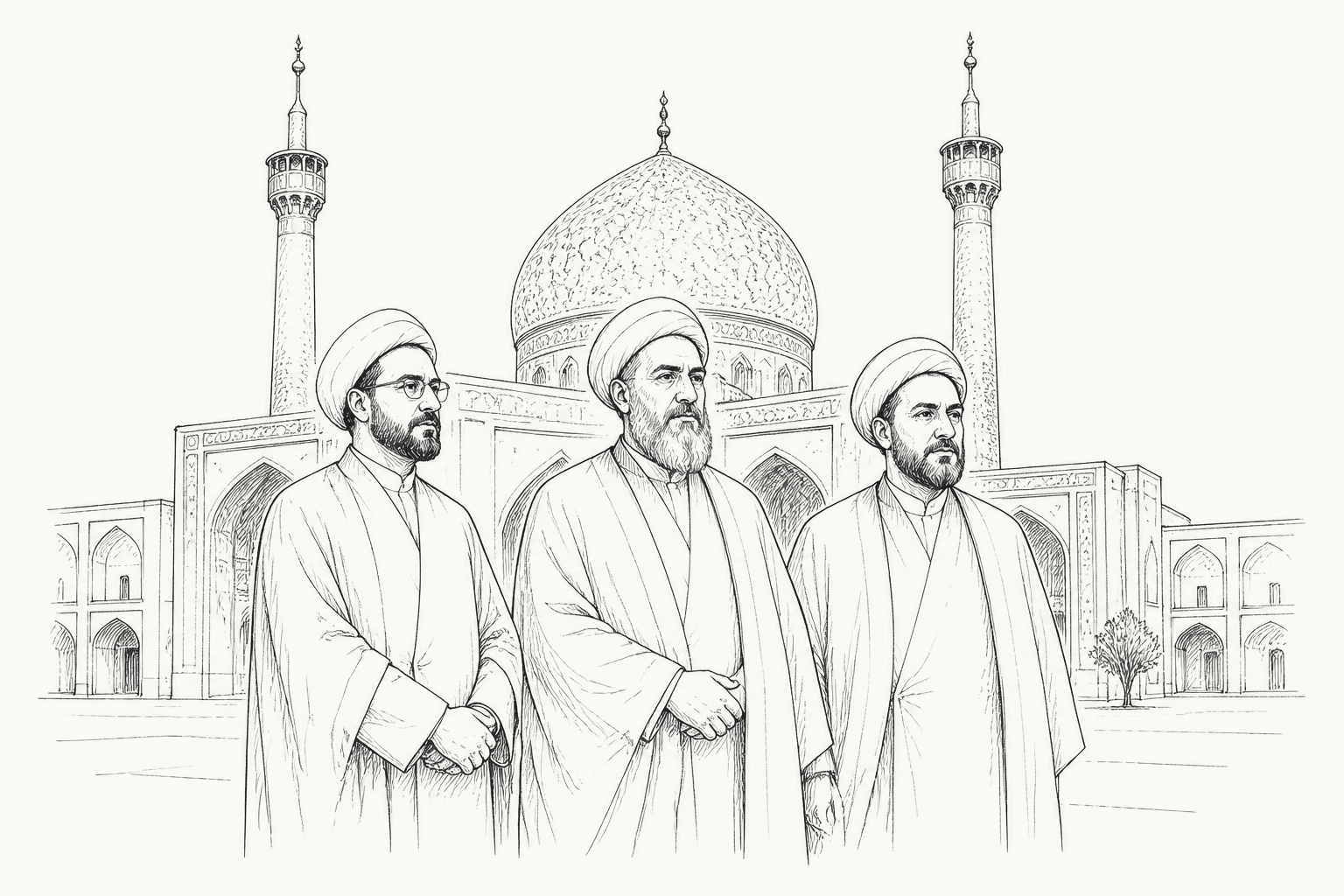
Iran's top officials and other sons of the slain Ayatollah Ali Khamenei walked openly into Tehran's Grand Mosalla on Sunday for the second day of funeral prayers, drawing a crowd that CBS News described as far larger than Saturday's opening. Khamenei's son and successor, Ayatollah Mojtaba Khamenei, still believed to be in hiding since being wounded in the Feb. 28 U.S.-Israeli strike that killed his father, did not appear.
The public turnout of senior figures was the first test of whether Iran's leadership will resume ordinary state ritual four months after the strikes that killed the elder Khamenei and dispersed his inner circle. Mojtaba's absence on the second day of the six-day funeral procession, which Iranian officials expect to draw 15 million to 20 million mourners across Iran and Iraq, leaves open the question of who is in charge when talks with the United States resume after Khamenei's burial in Mashhad on Thursday.
What shifted
Mourners dressed in black filed through the Grand Mosalla complex Sunday carrying banners and flags, walking to the site through security cordons that had shut central Tehran for the weekend. Iranian Revolutionary Guards commander Hassan Hassanzadeh, who is running the ceremony, told state TV prayers would be said over the coffin at 8 a.m. local time; authorities did not announce who would lead them. On Sunday evening the coffin is scheduled to leave the Mosalla for Monday's procession through central Tehran. The body then moves to Qom on Tuesday, on to Najaf and Karbala in Iraq later in the week and finally to the Imam Reza Shrine in Mashhad for burial.
The successor
Mojtaba Khamenei was named supreme leader a week after his father's killing but has communicated only through written statements. CBS News reported that he was wounded in the same Feb. 28 strike and that Israel has threatened to kill him. Gen. Ahmad Vahidi, the Revolutionary Guard chief believed to be part of a small circle in direct contact with Mojtaba, emerged from hiding on Thursday for the first time since Feb. 8. Speaking Friday, Vahidi said of the slain leader that "this martyrdom has strengthened our resolve."
Death to Trump
A poet, Mohammad Rasouli, drew cheers from the crowd Sunday when he asked over the funeral loudspeakers, referring to President Trump: "Why is the most bastard man in the world still alive?" CBS News called the moment the first direct call for Trump's killing by an emcee at the ceremony, which has featured posters and graffiti demanding the deaths of both Trump and Israeli Prime Minister Benjamin Netanyahu. Gholamreza Sabooni, a 29-year-old grocery worker, told CBS News: "I came here to shout and seek revenge. They killed our imam, we should kill their leader, Trump." The calls came as Trump, in his July 3 Mount Rushmore speech, said Washington "gave them a week off for a funeral because we're nice."
The counterview
Not every mourner endorsed the vengeance chants. Ziba Naderi, a 42-year-old nurse, told the Associated Press she was waiting for direction from the new supreme leader before endorsing any retaliation. "I heard the call for revenge, but our leader should say what we need to do," she said. "And we must listen to him." Neither the White House nor the Israeli government had publicly responded to the funeral's death-to-Trump chants by press time, and Sunday's body-tier reporting from the BBC and CBS News came from inside the ceremony rather than from Washington or Jerusalem.
U.S. and Iranian negotiators, mediated by Qatar and Pakistan, are scheduled to resume talks after Thursday's burial. The 60-day countdown built into the June memorandum of understanding, covering both the Strait of Hormuz and Iran's uranium stockpile, is expected to slip past its mid-August deadline before either question is settled.