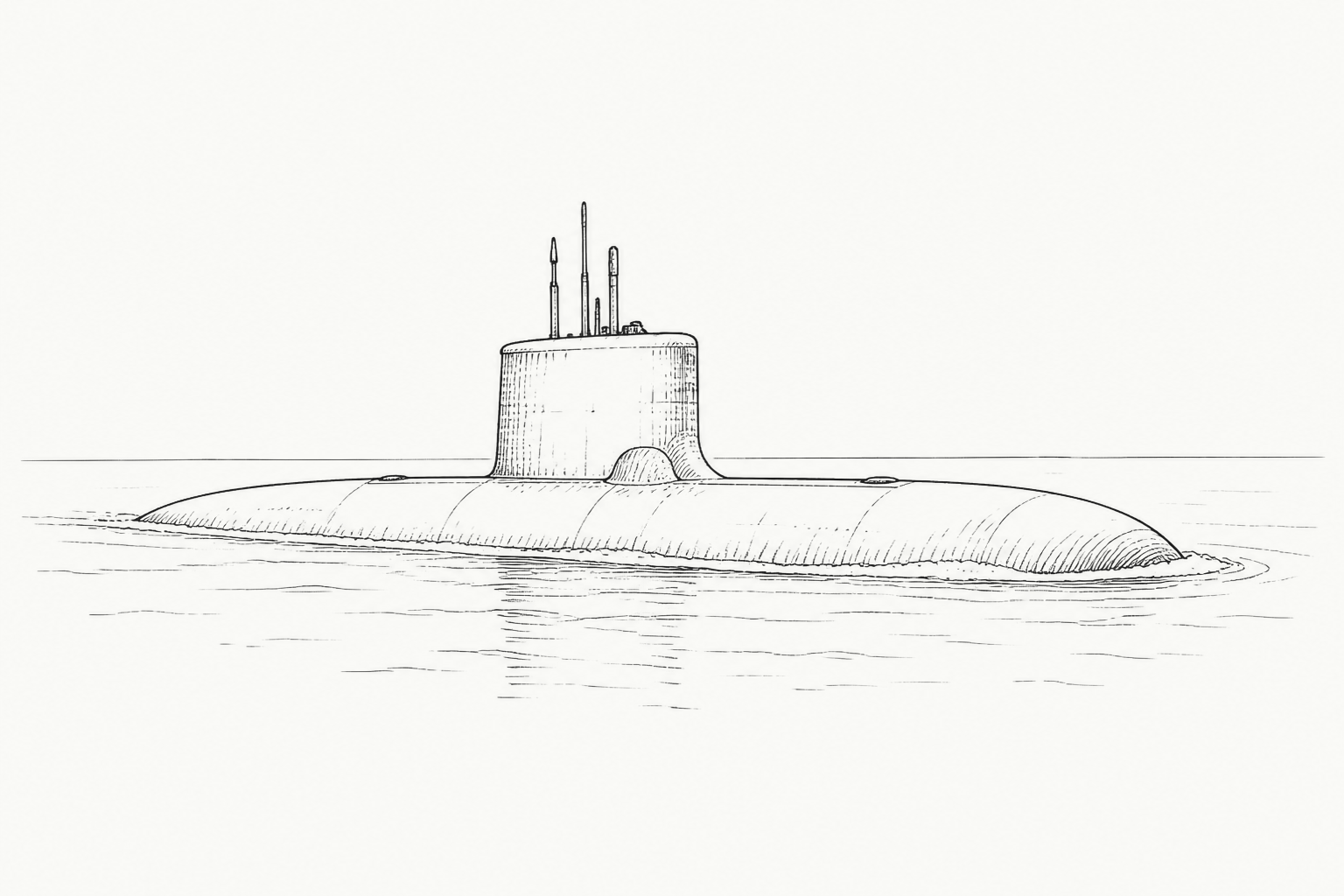
China test-launched a long-range ballistic missile from a nuclear-powered submarine into the South Pacific at 12:01 p.m. Monday, state news agency Xinhua reported, in the country's first Pacific missile test since 2024.
The launch drew formal rebukes from Australia, New Zealand, Japan and Taiwan within hours. Its timing overlapped with the signing of an Australia-Fiji mutual defense treaty in Suva and the start of the "Joint Sea-2026" China-Russia naval exercises in Qingdao. Xinhua reported the missile carried a dummy warhead and that the test was part of routine annual training.
Wellington and Canberra push back
New Zealand Foreign Minister Winston Peters said Beijing gave notice only hours before the launch. "It appears that despite our long-standing concerns about this type of activity, China carried out the test within hours of informing us," Peters said. He added that "New Zealand considers this an unwelcome and concerning development. We, like our neighbours in other Pacific countries, have no interest in China using the South Pacific as a testing site for missile capability."
Australian Foreign Minister Penny Wong said the government had raised objections directly with Beijing. "Australia has been clear with China that we regard this as destabilizing to the region," Wong said in Fiji. She added that "Australia has been clear that this proposed test is in the context of a rapid military build-up by China, which is lacking in the transparency and reassurance as to intent that the region expects."
Tokyo cites airspace and debris concerns
A joint statement from the Japanese government said officials had pressed Beijing before the launch over the missile's flight path and the risk of falling space debris in Japan's exclusive economic zone. "We strongly called for a rethink of the ballistic missile test-firing, so that it won't pose a threat to Japan's security such as by passing through Japan's airspace," the statement read. NBC News reported the debris ultimately fell outside the zone.
Splashdown in a nuclear-free zone
The missile landed inside the South Pacific Nuclear Free Zone, established by the 1986 Treaty of Rarotonga. China ratified the treaty's protocols in 1987. The last comparable Chinese test in the Pacific was in 2024; before that, the previous one was in 1980. According to the Nuclear Threat Initiative, China operates six ballistic-missile submarines and 59 nuclear-powered attack submarines. Beijing maintains a stated "no first use" policy on nuclear weapons.
Beijing urges restraint
A spokesperson for China's Ministry of Foreign Affairs said the launch complied with international law and was not directed at any country. "We hope that the relevant countries will avoid overinterpretation," the spokesperson said, describing the exercise as routine.
The Pentagon's 2025 report to Congress estimated China's nuclear stockpile at about 600 warheads in 2024 and projected the arsenal would exceed 1,000 warheads by 2030.