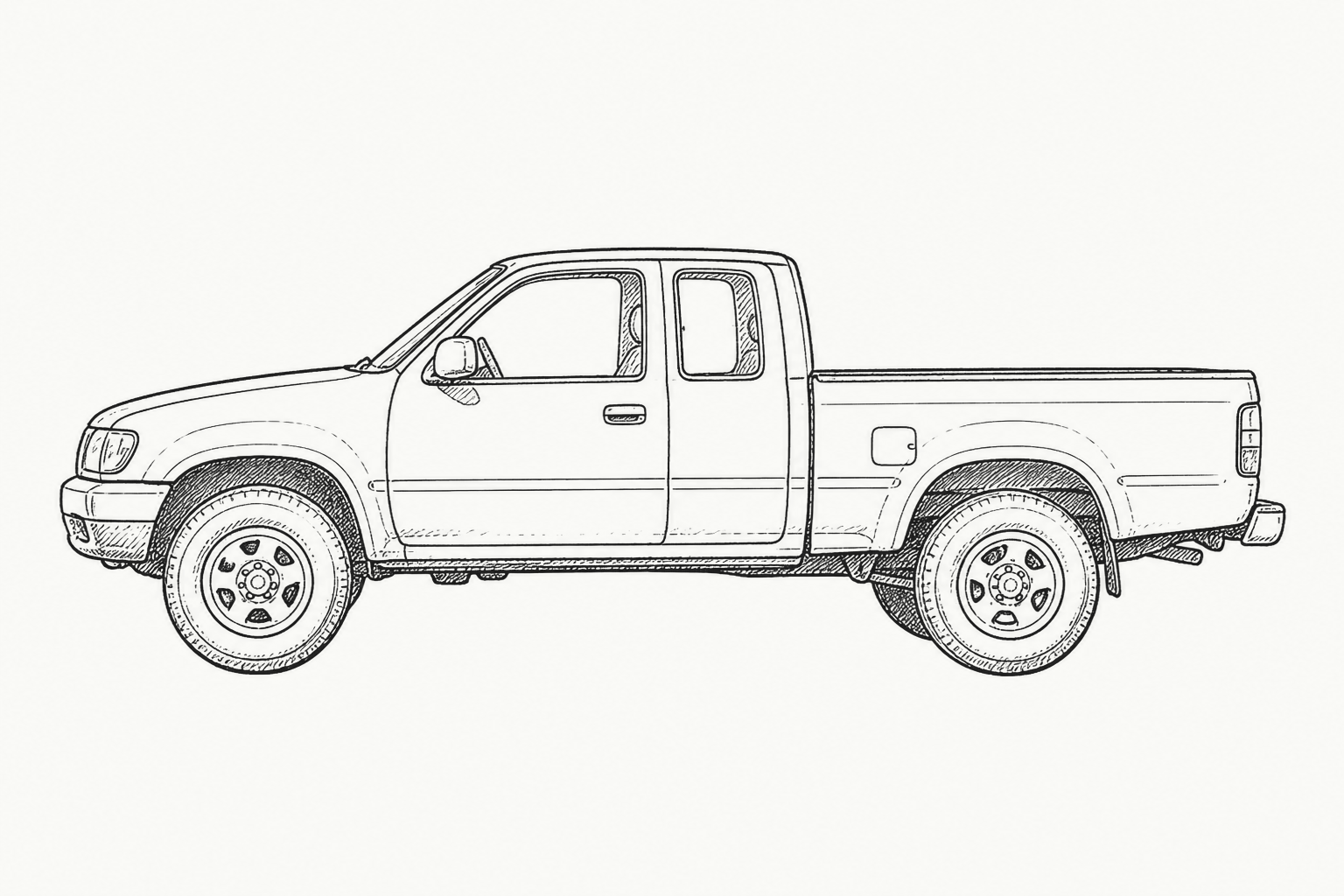
Toyota Motor said Monday it will invest $3.6 billion to shift most production of its mid-size Tacoma pickup from Tijuana, Mexico, to San Antonio over the next four years, adding a second assembly line and roughly 2,000 jobs at a Texas plant the world's largest automaker has already spent $8.3 billion to build out since 2003.
The move is the first concrete factory decision from a major automaker since the Trump administration last week declined to renew the US-Mexico-Canada Agreement for another 16 years, opting for annual reviews of a pact that could expire in 2036. Toyota has been among the biggest beneficiaries of the tariff-free North American supply chain USMCA underwrites.
The numbers
The San Antonio plant currently produces the Tundra full-size pickup, a Tundra hybrid and the Sequoia SUV hybrid. Toyota said the Tacoma expansion, codenamed Project Orca and first reported in May by Automotive News, will roughly double the site's 2.7-million-square-foot footprint by 2030 and lift annual capacity from about 200,000 vehicles to 350,000. A $531 million rear-axle plant on the same campus is scheduled to open this fall.
Toyota said in November it planned to invest up to $10 billion more in the United States through 2030 than it had previously projected. Ted Ogawa, chief executive of Toyota Motor North America, said the Tacoma decision was "a testament to our confidence in the region's workforce, innovation and long-term growth potential."
The Mexico piece
Toyota will not close its Mexican operations. Tacomas will continue to roll off the line at the company's Guanajuato plant, and a company spokeswoman told CNBC that Toyota is "maintaining its operations in Mexico" as the Tijuana transfer proceeds. In its statement, Toyota said it "remains committed to its operations throughout the U.S., Canada, and Mexico, and encourages a quick resolution to USMCA to make the North American region globally competitive."
That last line points to the tension in Monday's announcement. CBS News placed the shift in a broader pattern of automakers moving output stateside "as President Trump raises tariffs on automobiles, steel and aluminum," undercutting the tariff-free North American supply chain Toyota says it wants preserved. The company declined to disclose how many Tijuana jobs will disappear, or whether the 2,000 new San Antonio positions will offset the losses on the Mexican side of the border. Global automakers, CBS noted, have long produced vehicles in Mexico specifically to benefit from USMCA, the pact Washington last week declined to renew for another 16 years.
The scoreboard
Toyota still trails General Motors in the U.S. market but is closing fast. Toyota's U.S. sales rose 0.5 percent in the first half of 2026 to 1.24 million vehicles, according to Cox Automotive, while GM's sales fell 6.8 percent to 1.34 million as the Detroit automaker's bet on all-electric vehicles lagged Toyota's hybrid-heavy lineup.
Toyota said the Tijuana-to-Texas transfer will take about four years to complete.