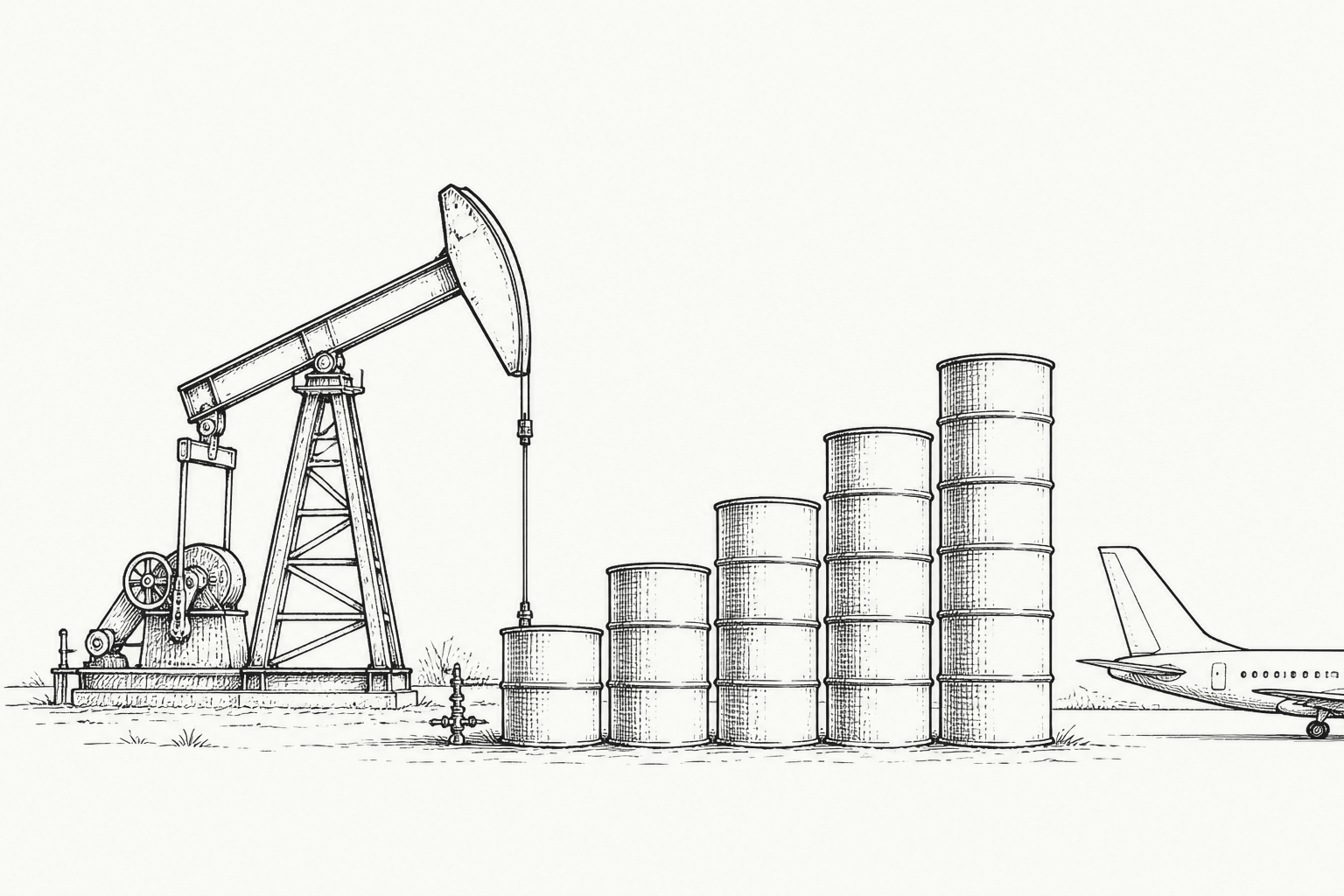
Oil prices jumped more than 4 percent Wednesday and airline stocks slid after President Trump threatened at the NATO summit in Ankara to bomb Iran a second time and reimpose the U.S. naval blockade on the Strait of Hormuz.
West Texas Intermediate futures rose 4.4 percent to close at $73.52 a barrel, and Brent, the international benchmark, jumped 5.2 percent to settle at $78.02. The U.S. Global Jets ETF fell 4 percent in its second straight decline after brushing all-time highs last week, resetting a market that had priced for the June ceasefire to hold.
What shifted
U.S. Central Command said American forces bombed more than 80 targets in Iran overnight, including air defense systems, command and control networks and anti-ship missile capabilities. Iran's foreign ministry called the strikes a "gross violation of the Memorandum of Understanding" the two countries reached last month, and state outlet PressTV said Tehran warned it would close Hormuz and respond with overwhelming force to further action. The Treasury Department on Tuesday canceled its authorization for Iran to sell oil, closing a channel critics of the interim deal had described as a major U.S. concession.
Trump's read
Speaking to reporters in Ankara, Trump said he considered the ceasefire over but did not expect a return to full-scale war. "I don't think it's going to start again," he said. "They hit a couple of ships and so we hit them much harder. When they hit, we hit 10 times harder." Trump also predicted crude would fall as tankers exit Hormuz, remarks that pulled oil off its session highs.
Airlines still up
The pullback has not erased the group's war-era gains. The Jets ETF is still up 10 percent since the U.S.-Iran war began Feb. 28, a stretch during which crude briefly soared as much as 78 percent before erasing the entire gain by last week. Put-buying accounted for almost 75 percent of Tuesday's options trading in JETS on volume about twice the 30-day average, according to ThinkOrSwim and Cboe LiveVol data. In the U.S. Oil ETF USO, traders bought more than 32,000 calls against just over 5,000 puts. "This has all the makings of a serious short squeeze under way," Phil Streible, chief strategist at Blue Line Futures, said.
Delta on deck
Delta Air Lines reports second-quarter earnings before the bell Friday. The stock is up 25 percent year-to-date, nearly triple the S&P 500's return, as executives cite warm weather and strong consumer demand. Options traders expect a 6 percent swing after the release, compared with a median 4 percent realized move over the past year. Put-buying in Delta options more than tripled call-buying Wednesday, though the day's biggest dollar trade was a call-buyer who spent almost $800,000 on 800 January 90-strike contracts that need an 11 percent rally to pay off.
Wednesday's market read came exclusively through CNBC. Iran's Revolutionary Guards and Gulf producers offered no market-facing response beyond the Hormuz-closure warning by press time, and Wall Street strategists outside the bullish oil-and-bearish-airline camp did not surface in the day's dispatches, leaving refiners' near-term buying plans and Persian Gulf shipping volumes for the next round of reporting.
Friday's Delta release will give traders their first fresh read on whether renewed conflict is denting a summer travel calendar that had carried the Jets ETF to within striking distance of records.