Brent crude settled above $100 a barrel for the first time since May on Thursday, closing at $100.69 after touching $102 intraday, as the U.S.-Iran war entered its 13th consecutive night and Tehran said it had carried out drone strikes on American military facilities across the Middle East.
Thursday's 7 percent single-day jump in the international benchmark ratifies the collapse of a 14-point memorandum of understanding that Washington and Tehran signed in June and that President Trump declared "over" earlier this month. The move is now large enough to remake the Federal Reserve's near-term calculus: futures traders put the probability of a Fed rate increase at next week's meeting at 36 percent, up from 12 percent a week ago, according to CME Group data. It would be the Fed's first increase since 2023.
Widening theater
Iran's army claimed strikes on U.S. bases in Kuwait, Bahrain's Interior Ministry reported air sirens sounded across the kingdom, and Iranian state media said alarms had been activated in Jordan. AFP and Reuters both reported a drone crash at Iraq's Erbil International Airport that temporarily halted flights before service resumed. Iranian state media said four people were killed and five wounded in the country's southwest during the American strikes.
U.S. Central Command said it had struck "Iranian military command centers, drone storage facilities, communication networks, coastal surveillance sites and maritime capabilities" overnight, part of what the Pentagon frames as a campaign to keep the Strait of Hormuz open. That campaign has run continuously since Trump declared the June ceasefire dead after Iranian attacks on shipping in the strait.
Oil moves markets
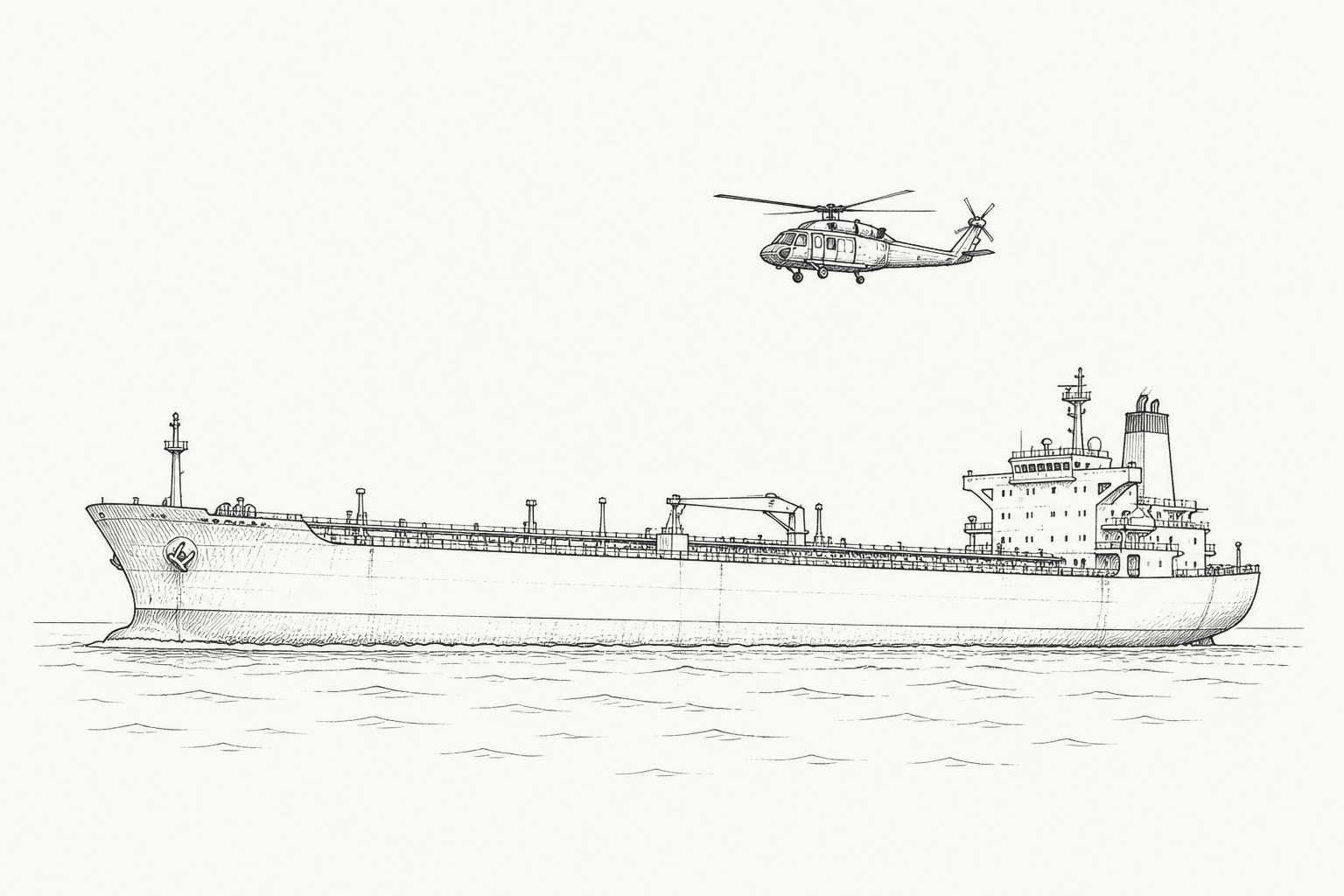
Yemen's Iran-backed Houthis struck two Saudi oil tankers in the Red Sea overnight, extending a maritime front they opened Monday when they declared an embargo on Saudi shipping. The attacks threaten a route Riyadh has used to move crude to global customers while Hormuz traffic has collapsed. Trump responded by threatening "major military punishment" against the Houthis and told the Axios news website he was considering restarting major combat operations in Iran and launching strikes "bigger than ever before."
The S&P 500 fell 1.2 percent, the Dow Jones Industrial Average dropped 506 points and the Nasdaq composite sank 2.2 percent in the worst U.S. stock session in a month. American Airlines fell 8.4 percent and Southwest Airlines 6.2 percent even as both carriers reported bigger spring profits than analysts had forecast. The 10-year Treasury yield rose to 4.69 percent from 3.97 percent before the war began, lifting long-term mortgage rates to their highest in nearly a year. Gasoline averaged $4.09 a gallon across the United States, according to AAA, from $3.93 a month ago.
Frozen funds fight
Trump said Thursday on his Truth Social platform that damages to ships and cargo in the Strait would be paid by "Iranian Money that the United States has in its possession, and controls." Point 11 of the June memorandum had committed Washington to making Iran's frozen funds "fully available for use."
Iranian Foreign Minister Abbas Araghchi said seizing another country's assets to "pay for unrelated future claims is an incendiary precedent." "Ensuing chaos will not be pretty or peaceful," he added.
Caveat
Thursday's account drew from wire services — AP, Reuters, AFP and the BBC — and from Central Command statements and Iranian state media; no partisan-leaning outlets on either side of the U.S. political spectrum featured in the reporting stream that reached the wires. Tehran's claims of successful strikes on U.S. bases in Kuwait had not been publicly confirmed or denied by the Pentagon by press time, and casualty figures from inside Iran are Tehran's alone. Kevin Warsh, the new Federal Reserve chair, told Congress last week he has "no tolerance to persistently elevated inflation," a signal analysts read as a willingness to raise rates even into a wartime slowdown.
The Federal Open Market Committee meets next week.