
MADRID — Prime Minister Pedro Sánchez on Tuesday declared the areas ravaged by Spain's wildfires "disaster zones," hours before a fourth heatwave was forecast to sweep the Iberian Peninsula and threaten a firefighting effort now spanning two countries and more than 300,000 evacuees.
The declaration formalizes federal relief for regions where roughly 77,000 hectares — about 190,000 acres — have burned since last week, and comes as forecasters expect temperatures to approach 40 degrees Celsius in parts of Spain from Wednesday through at least Sunday. Météo-France warned temperatures would climb to 33 to 35 degrees. President Emmanuel Macron convened a crisis meeting in Paris on Tuesday as flames advanced to within nine miles of Bordeaux.
Sunday's edition of the Journal reported that the twin blazes had driven more than 300,000 people from their homes. That figure has continued to climb: more than 90,000 have been evacuated in Spain alone, according to BBC reporting, with 56,500 in the Madrid region. Ninety-three firefighters in Gironde have been injured, French broadcaster France 3 Aquitaine reported.
The fire cloud
The blazes have grown large enough to generate their own weather. Fires in both countries have spawned a pyrocumulonimbus — a thundercloud formed when superheated air lifts smoke and vapor into the upper atmosphere. Nicolas Braz, a French firefighter captain, told Agence France-Presse the phenomenon is "erratic and unmanageable," capable of producing lightning that ignites fresh blazes miles from the fire line.
Stefan Doerr, a professor of wildland fire science at Swansea University, told CNBC that three heatwaves in a single European summer are without precedent. "The overall scale of the events now is beyond the capability of dealing with it effectively," he said.
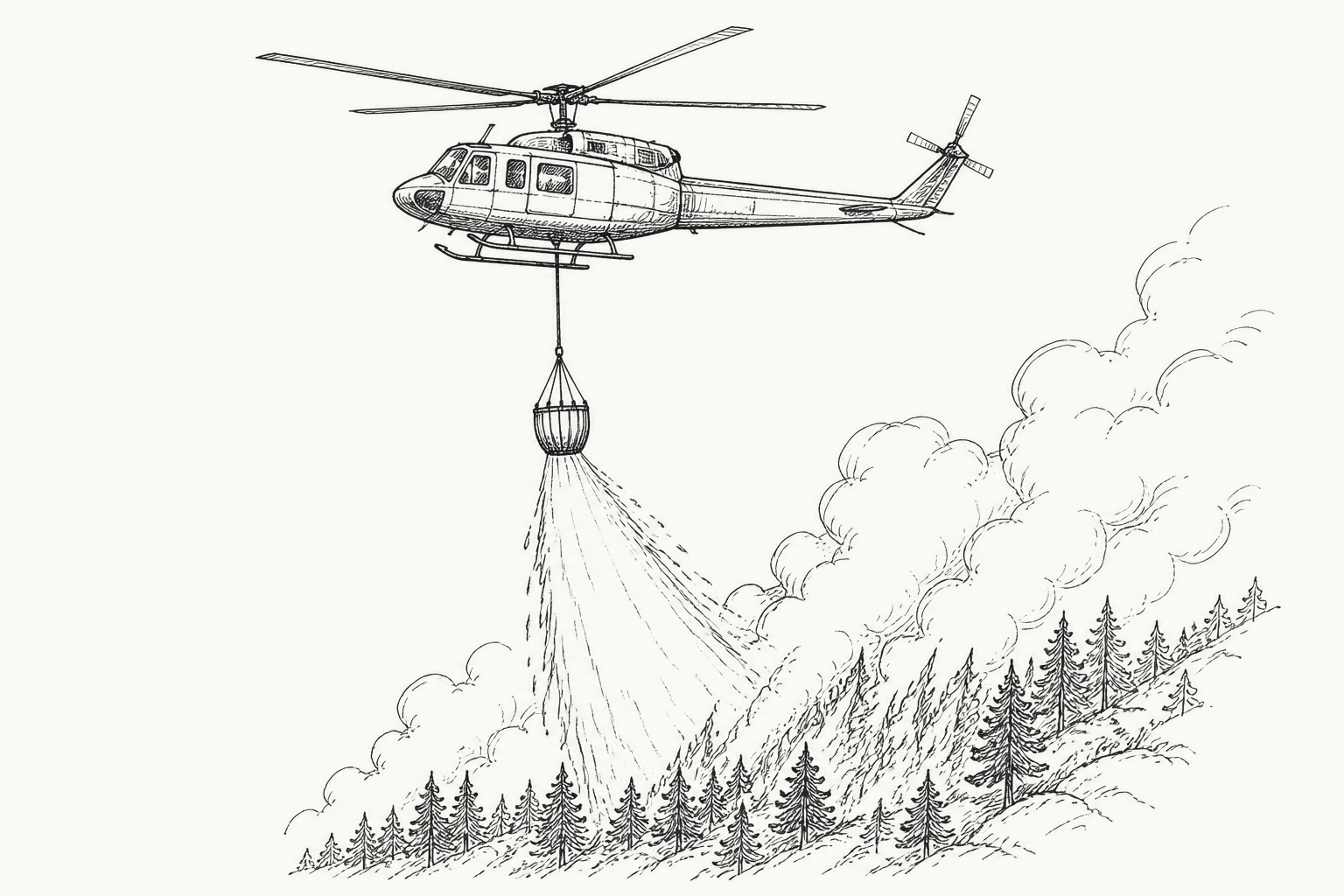
About 2,500 firefighters, 1,500 military personnel and 1,200 police and gendarmes are deployed in Gironde alone. Bulldozers have carved firebreaks up to 100 meters wide near Lacanau. Canadair water bombers, each capable of scooping 6,000 liters in 12 seconds, are kept in constant rotation.
Cautious optimism
Spanish Interior Minister Fernando Grande-Marlaska told La 1 television that overnight efforts had produced "relatively positive progress." Isabel Díaz Ayuso, the Madrid regional president who last week called the fires "the biggest natural catastrophe in the history of Spain," said Tuesday the situation was "improving little by little."
Sánchez struck a similar note, telling reporters he could see light "at the end of the tunnel," while urging regional governments to abandon "climate denial," which he called "the worst fuel for the fight against the climate emergency."
Georg Zachmann, a senior fellow at the Bruegel think tank, offered a bleaker view. The fires were "existential for the regions that have to pay for the evacuations, for the cost of firefighting, and eventually the infrastructure recovery," he told CNBC, noting direct costs from California's 2025 wildfires ran to $40 billion to $60 billion, with indirect costs estimated at $300 billion.
The heatwave is forecast to last at least until Sunday.