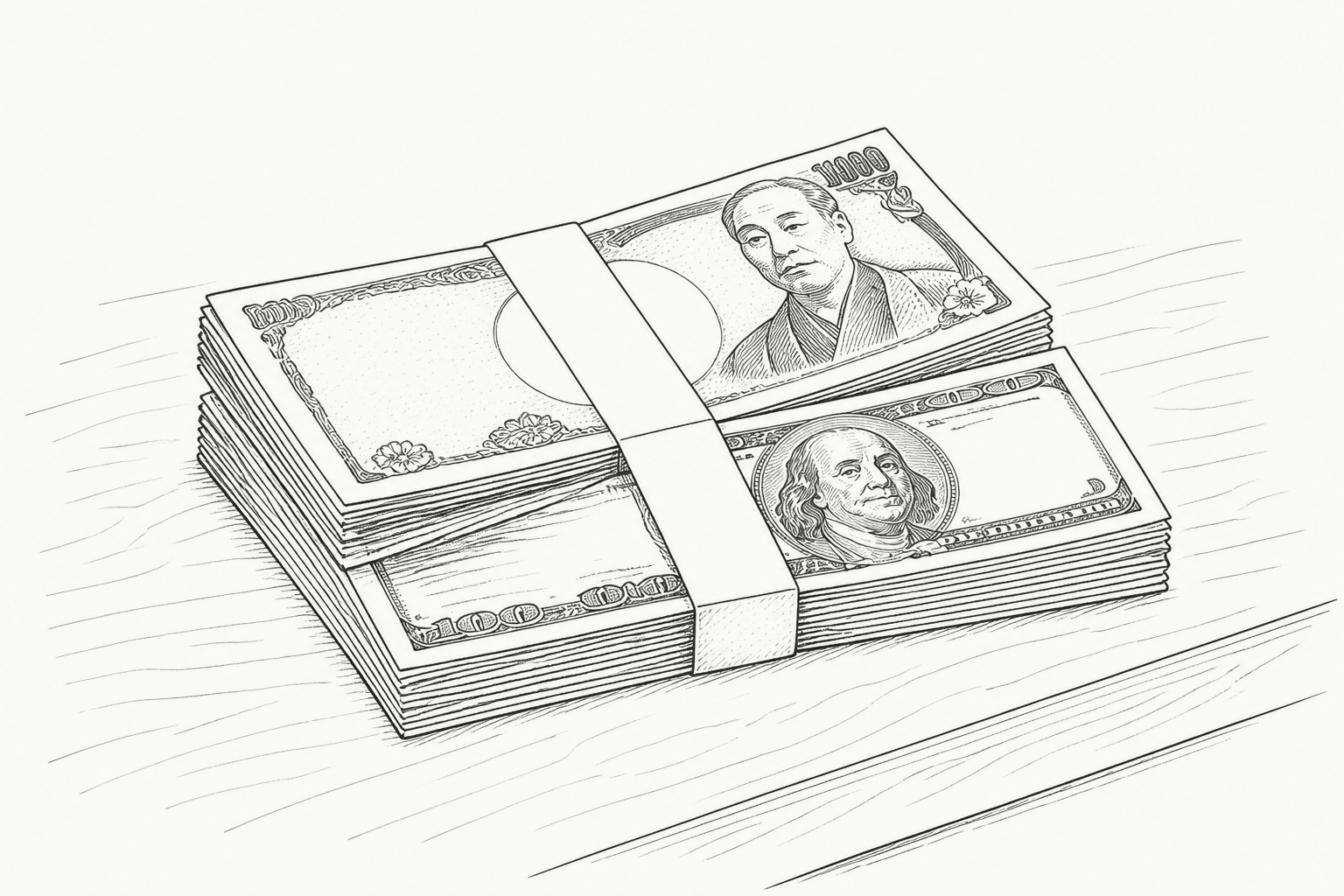
TOKYO — The United States and Japan jointly intervened in foreign exchange markets to strengthen the yen, both governments confirmed, the first coordinated action by the two Treasuries on the Japanese currency in 15 years and a rare public deployment of American reserves on behalf of an ally.
The dollar fell to nearly 155.20 yen in early Monday trading and was quoted at 156.70 yen in the early New York session, well off the 40-year high near 164 the currency struck last week. Japanese Finance Minister Satsuki Katayama and Treasury Secretary Scott Bessent said their governments would not hesitate to act again, a threat aimed at unwinding the large short-yen positions built up by investors wagering that the gap between U.S. and Japanese interest rates would keep widening.
"We will not hesitate to conduct further joint intervention," Katayama said Monday. Bessent posted on social media that the two governments' "coordinated foreign exchange actions countered disorderly yen movements," and added: "We strongly support Japan's decisive market and monetary steps to correct the substantial undervaluation of the yen."
A rare partnership
The last time Washington and Tokyo moved together in currency markets was in March 2011, and in the opposite direction — to weaken a yen that had strengthened sharply after the Tohoku earthquake and tsunami. Overt acknowledgment of foreign-exchange intervention is unusual, said Neil Newman, managing director at Astris Advisory Japan.
"It's very rare that the Americans will work with the Japanese on this, but there is an alignment of interests here basically between Japan and America," Newman said.
Size of the operation
Bank of Japan data indicated Tokyo may have sold nearly $59 billion of dollars to buy yen when it moved in New York markets Thursday, before the confirmed joint intervention Friday, the BBC reported. Reuters put Japan's Friday buying at $36.58 billion. The U.S. has not disclosed the size of its own purchases, but a Reuters photograph of a notepad in front of Bessent at a Friday cabinet meeting showed the line: "To Do: Buy Japanese Yen $5-10 bil."
Why Washington signed on
President Trump explained the U.S. role in unusually direct terms Sunday.
"They have a weakening yen, and they wanted a little bit of help," Trump told reporters. "And we're always there for Japan."
Trump said the United States drew "financial benefit" from the operation and called it a "signal of friendship." A weaker dollar makes U.S.-made goods cheaper in yen terms, and could lift American exports to Japan.
Shigeto Nagai, head of Japan economics at Oxford Economics, described Washington's participation as a low-cost gesture that also protected foreign-exchange and bond markets. "The United States agreed to participate in the coordinated intervention because it serves its national interests by offering the prospect of significant benefits at a low cost," Nagai said. He said he expected the two governments to intervene "intermittently in a coordinated manner for some time."
Forces still at play
The yen's slide has been driven by the widening yield gap between the two economies. The Federal Reserve's benchmark rate stands at 3.50 percent to 3.75 percent; the Bank of Japan sits at 1 percent, its highest level in 31 years. Both central banks stood pat last week. Prime Minister Sanae Takaichi has pressed to slash Japan's sales tax on food to 1 percent from 8 percent and to expand government spending — steps analysts said would tend to lift inflation and pressure the yen further.
Higher oil prices tied to the Iran war have amplified Japan's import bill, because crude is priced in dollars. Those same oil prices have kept the Fed from cutting, preserving the differential that has fueled the so-called carry trade.
Analysts warned that none of those fundamentals have changed. "The yield differential remains wide, Japan's energy-import burden remains significant, and the Bank of Japan is still moving more slowly than the market would normally require to generate a sustained currency reversal," said Stephen Innes of SPI Asset Management. Oxford Economics said it still expected the Bank of Japan to hold off on its next rate increase until December, arguing that the intervention itself reduces the pressure to hike quickly.
Others were more constructive. "The threat of further joint intervention and a faster pace of BoJ hikes should provide more support for the yen, and discourage speculators from running elevated short yen positions," said Lee Hardman, a currency analyst at MUFG.
What comes next
Whether Monday's levels hold will depend in part on how credibly Bessent and Katayama can keep the threat of further intervention alive without actually spending. Nagai said the "prolonged sense of vigilance regarding intervention will be effective in deterring speculators" even if the actual sums deployed remain modest. The next scheduled tests are the Bank of Japan's policy meeting and the willingness of speculators to probe Washington's resolve on a currency it has almost never publicly defended.