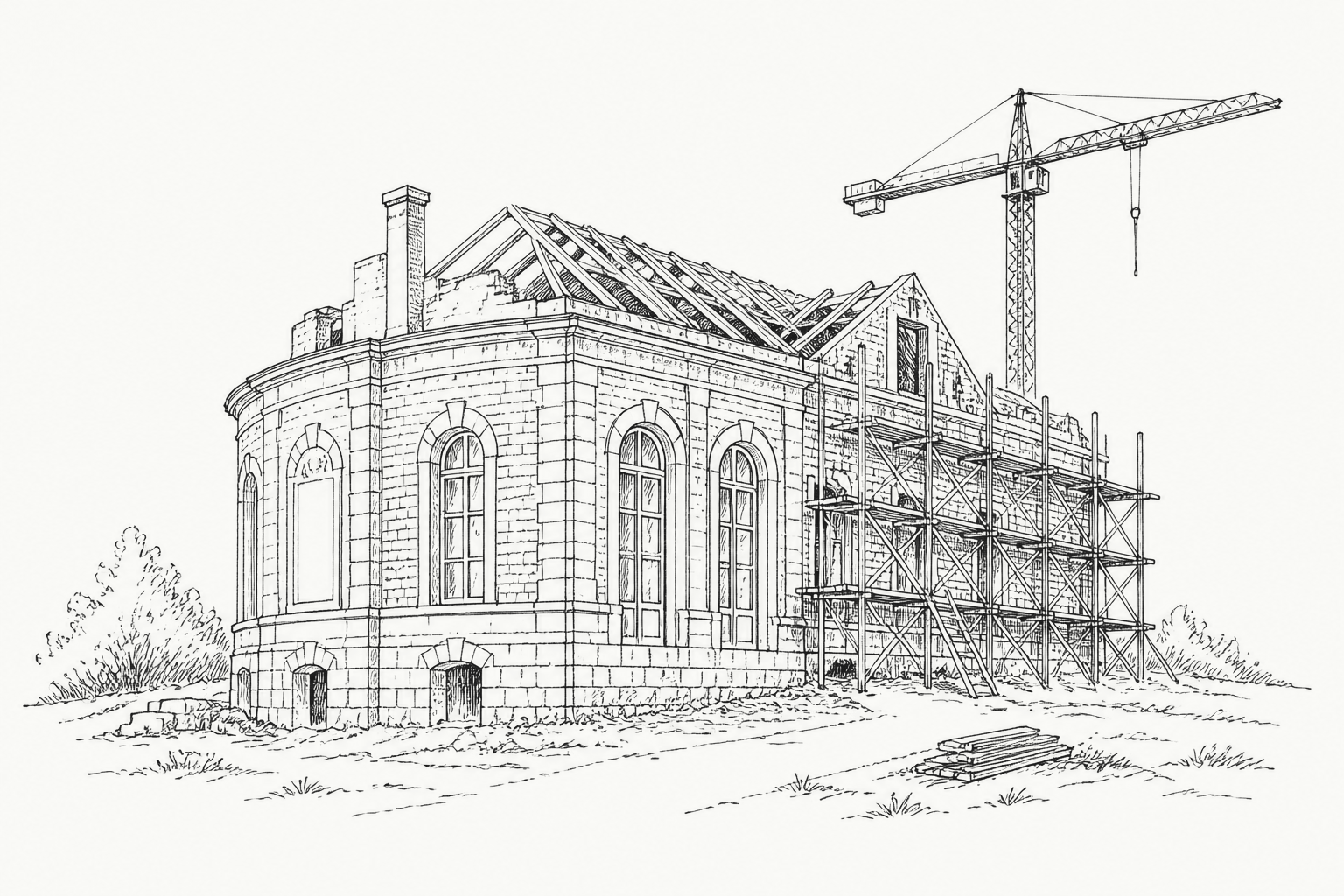
WASHINGTON — Lawyers for President Trump's administration told a federal appeals court Friday that judges have no power to halt construction of the $400 million White House ballroom because the work is already underway, in a two-hour argument that closed without a ruling.
The hearing tests Judge Richard Leon's April 16 order halting aboveground work on the 90,000-square-foot pavilion where the East Wing once stood, while allowing belowground work on a bunker and other "national security facilities" to continue. Leon, a George W. Bush nominee, drew a Justice Department appeal contending that presidents may not be enjoined from building on White House grounds once ground has been broken.
While the U.S. Court of Appeals for the District of Columbia Circuit weighs whether the National Trust for Historic Preservation has standing to sue, Senate Republicans opened a parallel front Monday, attaching $1 billion in ballroom security money to legislation funding Immigration and Customs Enforcement and the Border Patrol. The rider would put federal dollars behind a project the administration has said would be paid for privately.
The Millett exchange
Yaakov Roth, arguing for the government, told Judge Patricia Millett, an Obama appointee, that only Congress could stop the ballroom. Pressed on when the point of no return arrived, Roth said, "I think it would have been improper to enjoin it even on Day One." Millett walked him through hypotheticals in which the government bulldozed the Statue of Liberty and the White House itself; Roth conceded that under his standing theory, descendants of Ellis Island immigrants and of the enslaved people who built the executive residence would have no legal recourse.
Tad Heuer, arguing for the National Trust, said his clients had never sought to block the belowground bunker work. "Congress can allow ballrooms to be built — it’s its property," Heuer told the panel.
The Senate track
Government lawyers describe the ballroom as an outgrowth of upgrades meant to defend the complex against drones, ballistic missiles and biohazards. The Senate bill released Monday would direct the $1 billion to the Secret Service for "security adjustments and upgrades" — including "above-ground and below-ground security features" — and would bar spending on non-security elements. Republicans are advancing the funding through a partisan budget maneuver after Democrats blocked ICE and Border Patrol money in February. Sens. Lindsey Graham of South Carolina and Katie Britt of Alabama earlier introduced a stand-alone bill to pay for the ballroom, with Graham saying "It would be insane" to hold the White House Correspondents' Association dinner at a hotel again after Cole Tomas Allen was charged with trying to attack the April 25 event at the Washington Hilton with guns and knives.
Sen. Dick Durbin of Illinois, the top Democrat on the Senate Judiciary Committee, which oversees the Secret Service, called the rider a diversion. "While Americans are struggling to make ends meet as a result of President Trump’s failed policies, Republicans are focused on providing tens of billions of dollars for the President’s vanity ballroom project and cruel mass deportation campaign," Durbin said. No congressional Democrat's views on the D.C. Circuit case appeared in wire coverage of Friday's hearing.
The three-judge panel gave no timetable for its ruling. Senate voting on the immigration-and-security package is expected to begin next week.