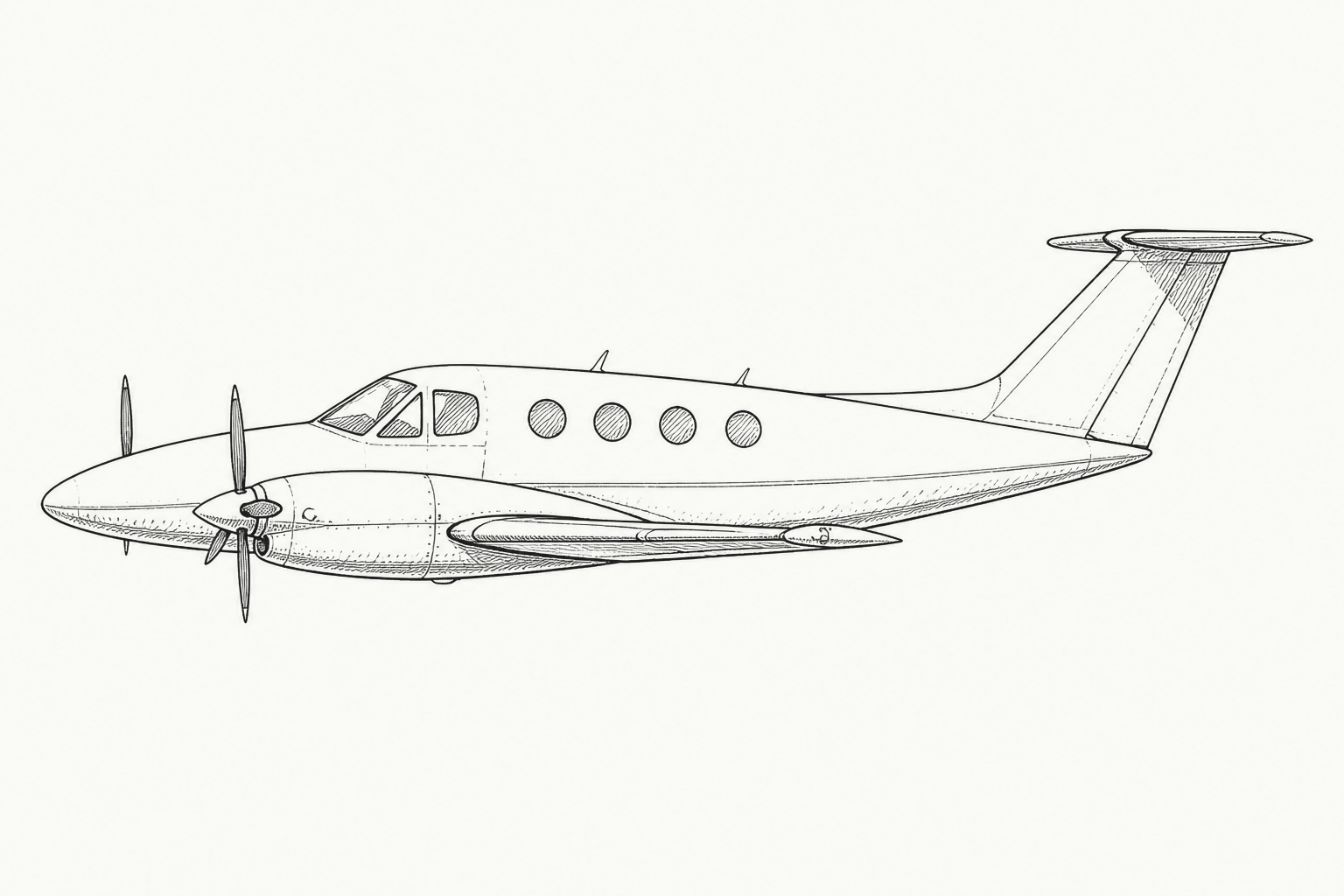
CAPE NEWENHAM, Alaska — A civilian-contracted Cessna 441 chartered to a remote U.S. Air Force radar site on Alaska's southwestern coast crashed on approach Thursday afternoon, killing all eight people on board, the military and Federal Aviation Administration said.
The crash occurred at 12:15 p.m. local time at Cape Newenham Long Range Radar Site Airport, about 450 miles west of Anchorage, and set off a search-and-recovery operation involving the U.S. Coast Guard, Alaska State Troopers, the National Transportation Safety Board and the military's Rescue Coordination Center. Rescuers who landed near the wreckage "confirmed there were no survivors," Alaskan Command said in a statement.
Who was aboard
Clint Johnson, the NTSB's Alaska region chief, said two pilots and six passengers were on the flight, which took off from Ted Stevens Anchorage International Airport and was headed to Cape Newenham, roughly 725 kilometers to the west. The plane went down on approach, Johnson said.
The U.S. Army Corps of Engineers said two of its employees were among the dead, according to Anchorage station KTUU-TV. The Corps also said in its statement that it had chartered the aircraft, KTUU reported — a discrepancy with the military's description of the plane as "civilian-contracted" that CBS News said it had asked the Corps to explain. The eight will not be publicly identified until 24 hours after their next of kin have been notified, the military said, and it did not detail the group's assignment.
The operator
Security Aviation, an Anchorage-based air charter company, operated the twin-engine turboprop, Johnson said. Sen. Lisa Murkowski, an Alaska Republican, wrote in a Thursday night social-media post that she had "traveled extensively with Security Aviation throughout Alaska, and have met many of their experienced pilots." She added that "Alaska is praying for those on board, their loved ones, and the team at Security Aviation." The company did not immediately respond to an NBC News request for comment.
The site
Cape Newenham LRRS sits on Alaska's remote southwest coast and is part of the Alaska Radar System, a network of stations that monitor aircraft entering and moving through Alaskan airspace and along the state's borders. The Pacific Air Forces Regional Support Center manages the facility.
Lt. Gen. Robert Davis, commander of Alaskan Command, the Alaskan North American Aerospace Defense Command Region and the Eleventh Air Force, called the crash "a devastating loss for our military family and the communities we serve." Davis described those on board as "dedicated professionals carrying out a vital mission in a demanding environment," and said the military's "absolute priority right now is providing unwavering support to their families, friends and teammates during this devastating time." He did not specify what the mission had been.
What officials have not said
No agency has yet offered a cause. The NTSB will lead the investigation with FAA support, and neither has indicated whether weather, mechanical failure or terrain figured in the crash. The Air Force has not released a passenger manifest or described the specific work the eight had been sent to perform at the isolated radar station.
The NTSB typically publishes a preliminary report within 30 days of a fatal accident.