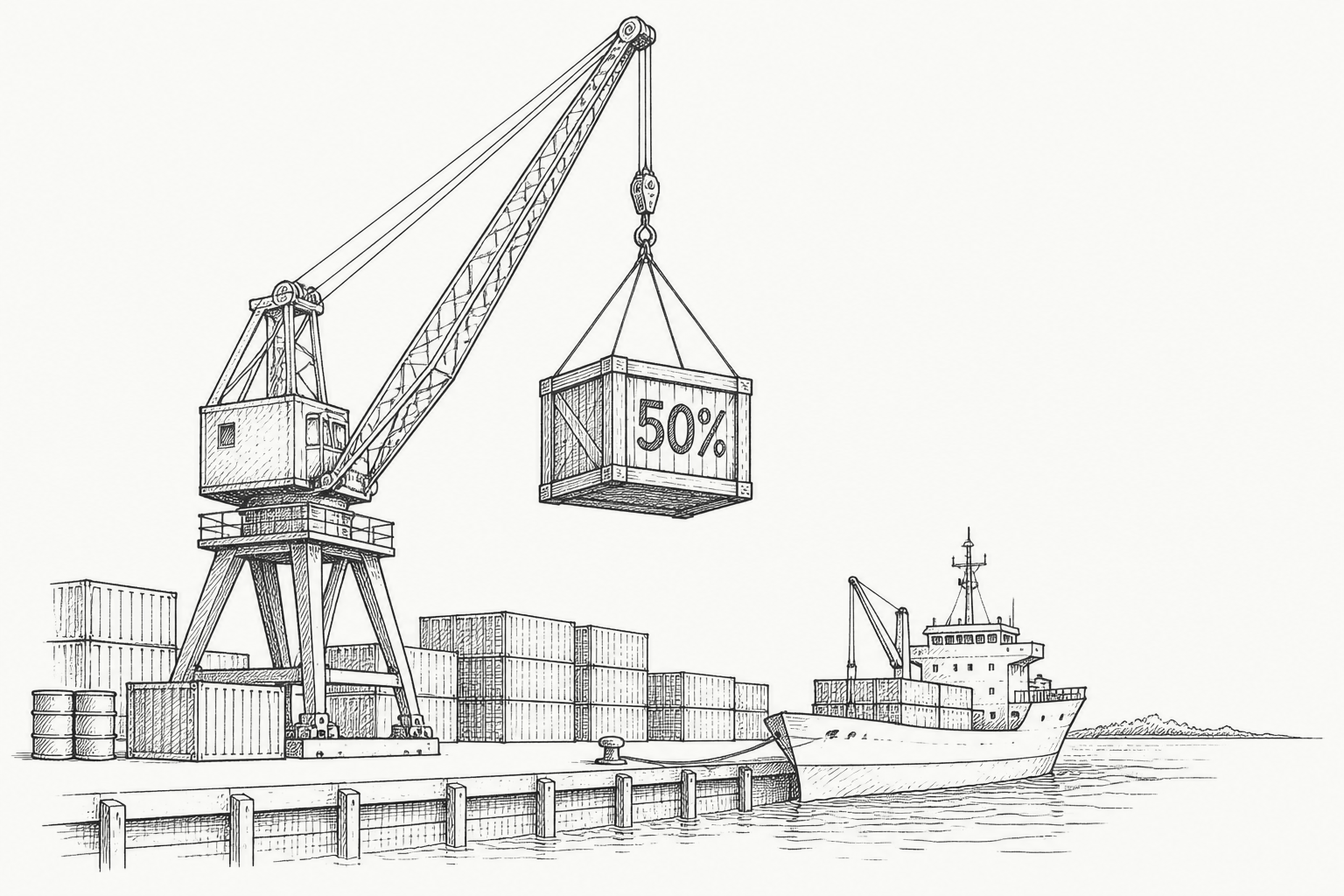
OTTAWA — Prime Minister Mark Carney on Saturday named the American sectors Canada will hit with dollar-for-dollar retaliatory tariffs on Sept. 8, hours after 50 percent U.S. duties on about $20 billion of Canadian goods took effect and President Trump used a Truth Social post to reprise his call to turn Canada into the 51st state.
The escalation seals a break with a trading partner Ottawa long counted on for privileged market access, and leaves no scheduled path back to talks that ruptured Friday night. U.S. Trade Representative Jamieson Greer told Fox News on Saturday there were "no new planned talks with the Canadians." Carney, in his first address since suspending negotiations, said the two countries were now in a trade "war."
Ottawa's target list
Carney said Canada's counter-tariffs, to be published in the coming days and imposed the Tuesday after Labor Day, will fall on U.S. steel, dairy, appliances, agricultural equipment, pulp and paper and electronics. The prime minister said Canada was retaliating "reluctantly" to protect its workers and industries, and conceded the response would "raise costs and reduce choice for Canadians."
Carney also disclosed what Ottawa had offered before talks collapsed. Canada, he said, had been willing to drop remaining retaliatory tariffs on U.S. steel, aluminum and automobiles if Washington substantially cut its own, and to press Canadian provinces to restore sales of U.S. alcohol. He said Washington's final demands went too far, including a restriction on Canada's freedom to negotiate trade deals with other countries.
"We cannot accept what they've offered, and we will not give what they've asked," Carney said. "They asked too much and they offered too little."
Trump's response
Trump broke his silence early Sunday with a Truth Social post that said Canada wanted "the benefits of being a State, without being one" and that American farmers had been charged "massive amounts of Tariffs" for years. It was his first comment since the talks collapsed.
The 50 percent tariffs, which Trump imposed under Section 338 of the 1930 Tariff Act, cover roughly 5 percent of Canada's annual exports to the United States. They apply to wine, dairy, cement, clothing, hockey equipment and other goods, and stack on earlier U.S. levies on Canadian steel, aluminum, autos and lumber. Greer said Washington had been prepared to cut some of those earlier duties as part of the deal that failed.
"We're moving forward with measures that respond to Canadian retaliation," Greer told reporters late Friday. "After a year of that retaliation, we've said enough, and so we've taken countermeasures."
The provinces line up
Provincial and opposition leaders closed ranks behind the prime minister. Ontario Premier Doug Ford, whose auto- and steel-heavy province is most exposed to U.S. levies, said Trump "can't be trusted" and pledged Carney his "full support" for matching Washington "tariff for tariff, dollar for dollar." British Columbia Premier David Eby said the U.S. demand to curb Canada's outside trade deals "would reduce us to the economic equivalent of the 51st state." Conservative opposition leader Pierre Poilievre called the U.S. tariffs "unjustified."
Alberta Premier Danielle Smith, whose oil-producing province has cultivated ties with the Trump administration, urged both sides to resume negotiations. Quebec Premier Christine Fréchette said the tariffs would cost jobs and vowed measures for affected sectors.
Economists framed the immediate hit as modest. Royal Bank of Canada estimated the new tariffs would directly affect about 0.4 percent of Canadian gross domestic product, given the narrow slice of goods covered. The damage could grow if the fight broadens, more sectors are drawn in or investment stalls. Canadian travel to the United States was already down nearly 29 percent by car and 27 percent by air in July from a year earlier, Statistics Canada said.
The other side
No source from a right-leaning outlet appeared in the day's reporting on the breakdown, leaving the administration's case represented mainly by Greer's Fox News appearance and Trump's Truth Social post. Greer said Canada rebuffed a deal that would have cut U.S. levies on Canadian steel, autos and lumber — sectors, he said, that "are sensitive for them" — and that the tariffs are aimed at "protecting American workers and protecting American supply chains." The Trump administration cast the retaliation now underway as evidence Ottawa was never negotiating in good faith.
The dispute lands in a midterm election year in which the cost of living is already an issue for American voters. Businesses closest to the border are absorbing the first shocks: Kim Osgood, co-owner of Paloma Clothing in Portland, Ore., told NPR that a Canadian-printed pillow line featuring her artwork sells for $59, and that a normal markup under the new duty would push the price to $86.
Canada's countermeasures take effect Sept. 8. No new U.S.-Canada trade talks were scheduled as of Saturday.