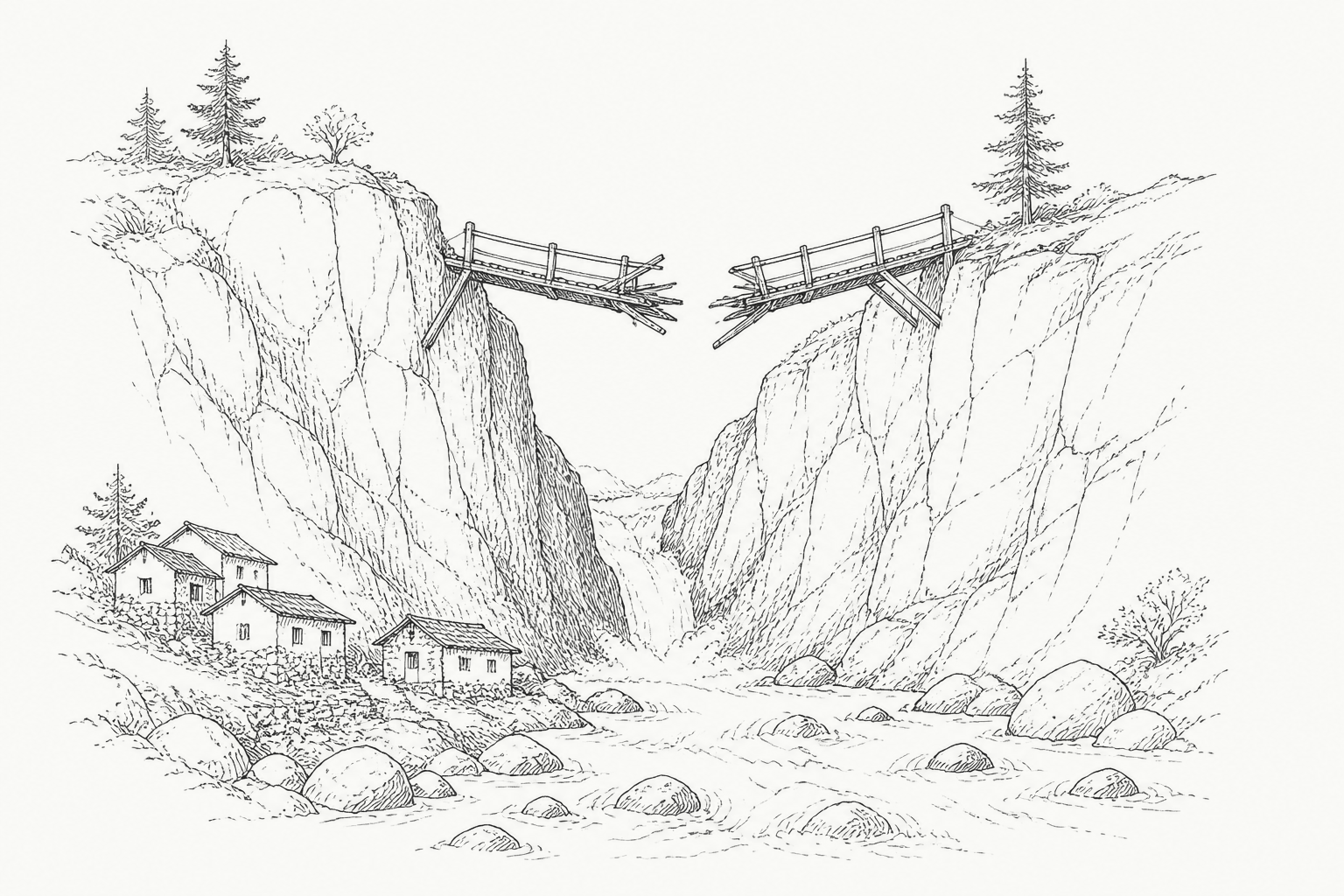
KATHMANDU — Nepal Police reported at least 353 people dead and 826 missing on Thursday from a catastrophic flash flood that tore down a Himalayan river system the day before, triggered by a glacial collapse that U.S. authorities had at first mistaken for an earthquake.
Chinese state broadcaster CCTV said a further 558 people were missing in Tibet's Gyirong county, including 260 foreign nationals, and three had been reported killed. Between the two counts, more than 1,300 people are unaccounted for.
The Americans
Hikmat Singh Ayer, chief executive of the Nepal Tourism Board, told CBS News on Thursday that at least 65 Americans were among the missing foreign nationals, almost double the count of a day earlier. Al Jazeera reported that 177 Indians, 63 Americans, 34 Australians, 33 Britons and 25 Canadians were among tourists missing from more than two dozen countries; the modest gap between the U.S. figures reflects the pace at which lists are being updated as bodies are found and survivors reached.
Two U.S. nationals — a man and a woman in their 50s — were among 27 foreign nationals the Nepal Tourism Board said had been rescued from the flood zone in Rasuwa district. Secretary of State Marco Rubio said the department "stands ready to support the government of Nepal with needed humanitarian assistance" and the State Department dispatched an adviser and a $500,000 grant to Catholic Relief Services, CBS reported.
What triggered it
The USGS first reported a magnitude 4.4 earthquake early Wednesday about 41 miles north of Kathmandu. It later withdrew that call. The seismic event, the agency said, was in fact a magnitude 5.2 glacial collapse; no earthquake occurred. The agency told Fox News its updated conclusion was based on data from nearby seismic stations, long-period seismic waves and satellite imagery.
Climate scientists at the Kathmandu-based International Centre for Integrated Mountain Development said an ice-rock avalanche from a glacier likely triggered the surge. "Hydrological observations indicate the exceptional speed and magnitude of the flood wave," the centre said in a statement quoted by CBS, noting that water levels on the Trishuli River rose by as much as 27 feet in half an hour.
"The Lhende Khola has flooded twice in 14 months, this time triggered by an ice rock avalanche from a glacier on the Nepal side that blocked the river and released a sudden surge downstream," said Saswata Sanyal, a disaster-risk specialist at the centre, in the same CBS account.
The valley
Bidur, on the banks of the Trishuli in Nepal's Nuwakot district, was among the towns overrun. "Our teachers were shouting," Gyan Deep Sapkota, a grade 11 student at Trishuli Secondary School, told Al Jazeera, describing the school's rush to evacuate. In Dhunge bazaar, resident Shoyam Rajbhandari told CBS: "When I reached Dhunge bazaar, in half an hour, the flood came and damaged all the market. How many people are missing or dead, we don't know."
Rescue
Nepalese army and private helicopters have been ferrying tents, food and medicine to villages cut off along the trekking corridor between Lhasa and Kathmandu; Army spokesperson Brig. Gen. Raja Ram Basnet said 100-plus people had been rescued by air Thursday morning and that eight foreign nationals had been evacuated to the capital. Bodies were being found 62 miles downstream in Chitwan district. In Tibet, CCTV said mud averaged more than five feet deep at the Gyirong crossing and warned that a barrier lake had formed, complicating rescue.
The Dalai Lama offered a statement of mourning through AFP: "I pray for all those who have lost their lives, and offer my sympathy and heartfelt condolences to the bereaved and to all those affected by this tragedy."
Counterpoint
Attribution in the first days of a mountain disaster is preliminary; the USGS's own initial call was withdrawn within 24 hours. Whether the collapse itself was made more likely by warming — Himalayan glacier melt has doubled since 2000 by one Kathmandu team's count cited by CBS — or would have occurred at similar scale absent it, will be the work of longer studies. The same river system saw a similar glacial-lake outburst in August 2025 that killed nine and damaged the Nepal-China bridge.
Death and missing counts were expected to move again as helicopters reached the most isolated villages.