KATHMANDU — The combined death toll from Wednesday's Himalayan flash flood climbed past 750 on Sunday as Nepal issued fresh flood alerts along the Bhotekoshi River and Nepali Army crews broke through with drills into a hydropower tunnel where more than 100 workers may still be alive.
The Sunday update reframes the scale of a disaster that began four days ago when a glacier collapsed near the Nepal-Tibet border and sent a wall of water down the Trishuli and Bhotekoshi river systems. Nepal's National Disaster Risk Reduction and Management Authority put its death toll at 734 and its missing at 2,498. Chinese authorities in Tibet reported 16 dead and 546 unaccounted for. That leaves roughly 3,000 people missing across the two countries, more than double the death toll Nepal Police first reported Thursday.
Tunnels and drills
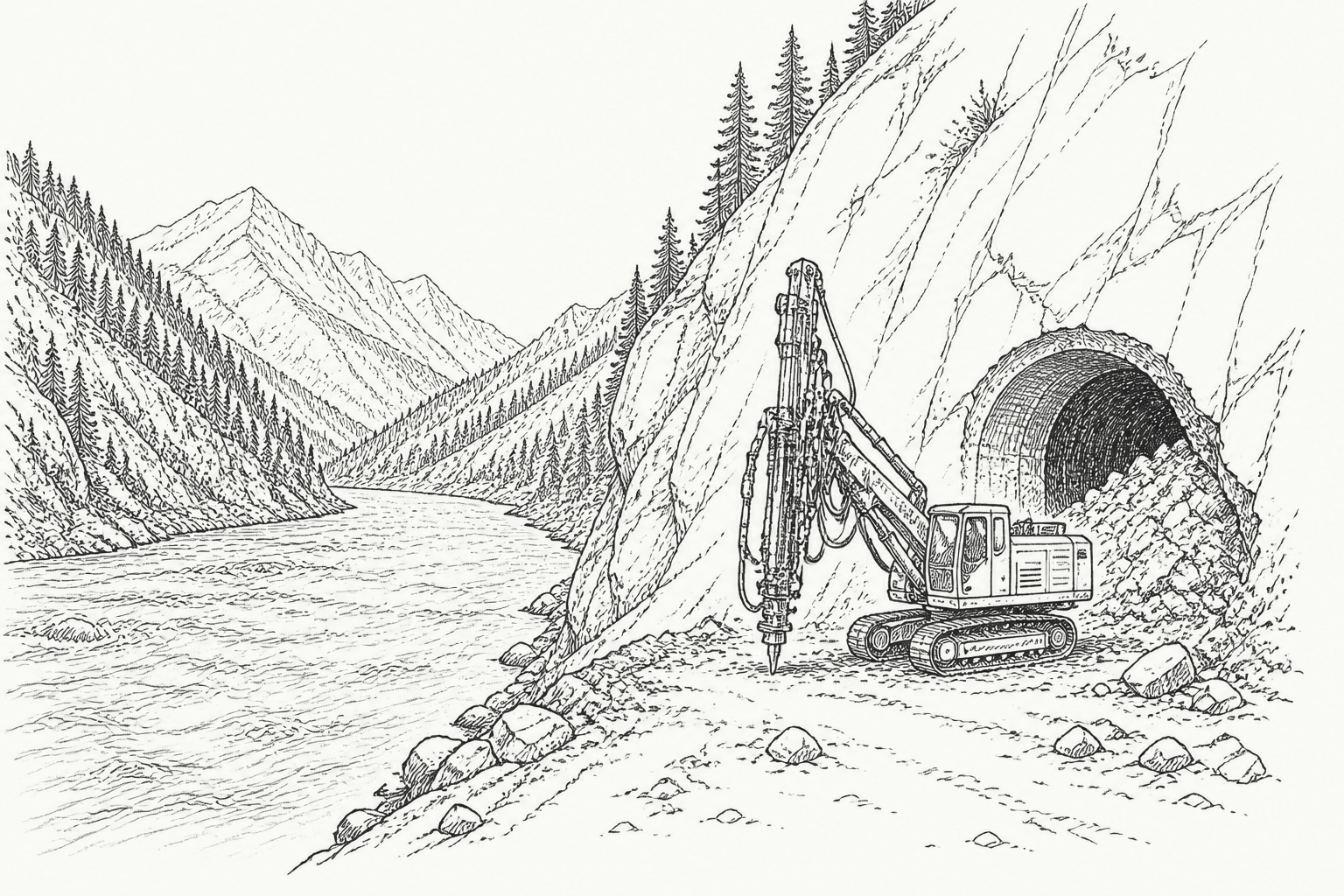
Key rescue work has focused on the 216-megawatt Upper Trishuli-1, Trishuli 3A and Trishuli 3B sites in Rasuwa district, where Nepal's Independent Power Producers' Association counts 933 hydropower workers among the missing. On Saturday evening, army teams at Trishuli 3A drilled through into the upper part of a mud-swamped tunnel, began pumping air and sent in a camera. Overnight rain and a rising river filled the excavation area with water before conditions eased. "As the floodwaters have receded, the team has resumed efforts to locate the tunnel entrance using drilling machines, excavators, hydraulic cutters and other equipment," Nepal's army said Sunday.
An 82-person joint team of soldiers, armed police and Nepal Police has worked through the night since Saturday. Nepal's Foreign Secretary Amrit Bahadur Rai said the government has mobilized 19,000 security personnel and 16 helicopters.
What is not moving
Progress is uneven. "We have not been able to carry out a rescue. The tunnel is filled with mud and it is impossible to enter," Baburaj Maharjan, executive director of Chilime Hydropower Company, told the Kathmandu Post, describing the 22-megawatt Chilime project 133 kilometers north of Kathmandu. Bodies are washing downstream faster than local morgues can process them. Nepal has asked donors for DNA testing kits and body freezer units, and unidentified bodies have been sent to 21 hospitals for preservation. Finance Minister Swarnim Wagle estimated losses at "more than $4bn."
The foreign toll
Chinese authorities said Sunday that 261 foreign nationals from 23 countries are missing on the Tibet side, including 104 Nepalis, 49 Indians, 33 Latvians, 18 Americans and 15 Britons. The United States and Canada have each pledged $3.6 million in humanitarian assistance, the United Kingdom $6.8 million and the United Nations $2.5 million in emergency funding. The European Union promised $2.3 million, and the International Federation of Red Cross and Red Crescent Societies launched a $31 million appeal. China has mobilized 2,100 rescue workers and allocated 220 million yuan, or about $32.7 million.
What the world cannot see
The picture from the Tibet side remains partial. Foreign journalists cannot enter without government permission. "We are completely reliant on the government and state media," said Al Jazeera's Katrina Yu, reporting from Beijing. The BBC reported that Chinese state broadcasters have aired only a single still-frame from the CCTV footage of the torrent tearing through Gyirong Port that spread worldwide, and that survivor accounts and user-generated video from inside Tibet are almost nowhere to be found. The International Campaign for Tibet has called on Chinese authorities to "disclose complete and verifiable information about the damage and casualties."
Water levels in the Trishuli River rose again Sunday morning after fresh rain, sending residents and rescue crews to higher ground. Al Jazeera's Samer Allawi, reporting from Nepal, said authorities have "not yet moved to the second phase of relief operations, which includes humanitarian assistance and reopening roads."